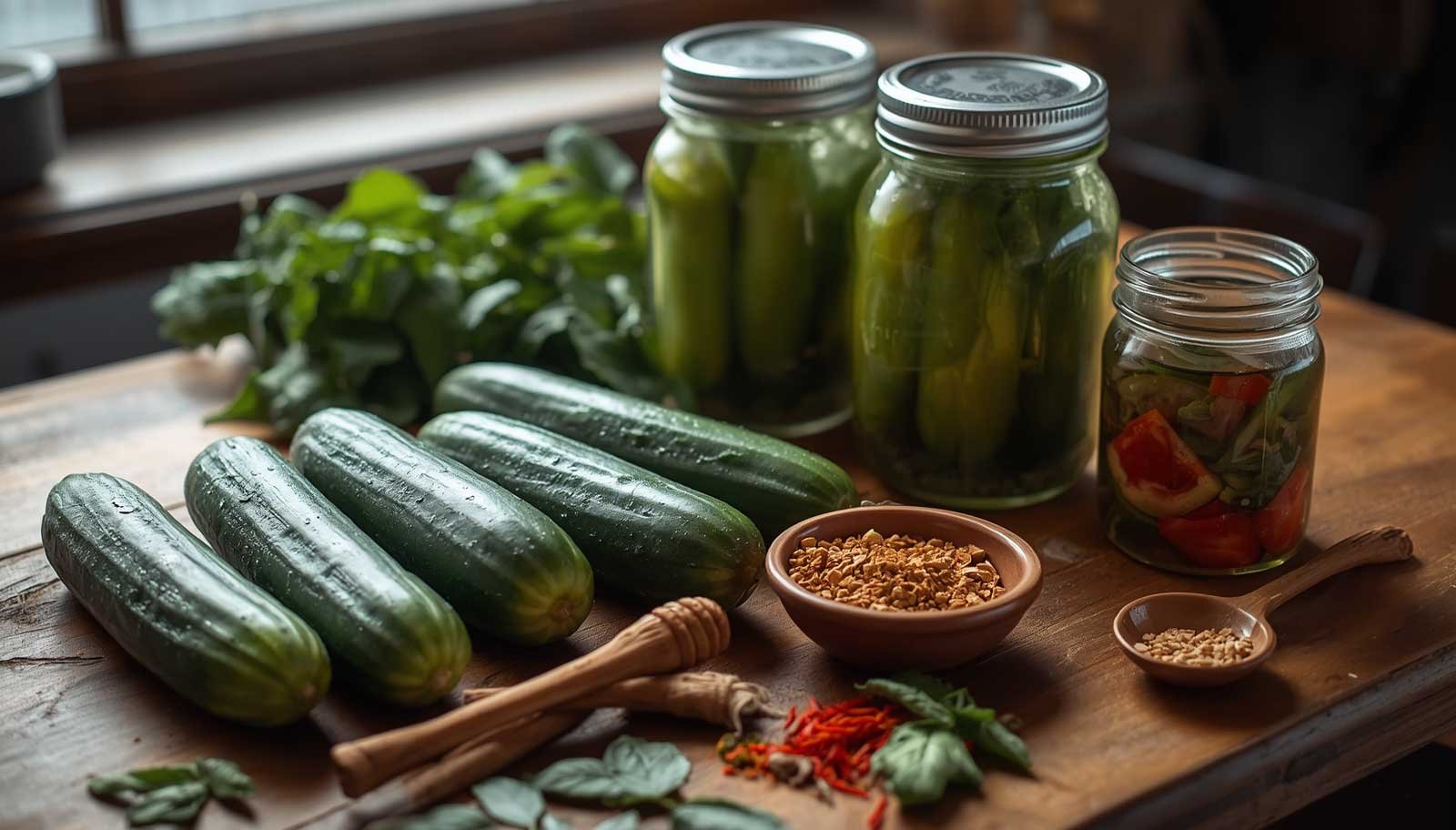
If your garden is producing more cucumbers than you know what to do with, making homemade pickles is one of the easiest ways to use them up. You do not need special canning equipment, a large pot of boiling water, or hours in the kitchen. With a few simple ingredients and a clean jar, you can make crunchy, tangy refrigerator pickles right at home.
These homemade cucumber pickles are made with vinegar, water, salt, garlic, and fresh dill. They have that familiar salty, sour flavor with just the right amount of garlic. I love adding them to sandwiches and burgers, serving them alongside grilled food, or eating a few straight from the jar when I want something crunchy.
The best part is how little effort they take. You prepare the cucumbers, mix a simple brine, pour it into the jar, and let the refrigerator do the rest. There is no pressure canner, water bath, or complicated preserving process involved.
One important thing to know is that these are refrigerator pickles, not shelf-stable canned pickles. They must stay refrigerated and should never be stored in the pantry.
Why Make Pickles Without Canning?
Traditional canning is useful when you want to preserve jars of pickles at room temperature for a long period. However, it requires a tested canning recipe and the right processing method.
Refrigerator pickles are much simpler. You make a vinegar-based brine, cover the cucumbers, and keep everything chilled while the flavors develop.
They are perfect for small garden harvests, beginners, and anyone who wants homemade pickles without buying extra equipment.
You can also customize the flavor easily. Add dill for a classic pickle taste, chili flakes for heat, or mustard seeds for a little extra tang.
Ingredients You Will Need
You only need a handful of everyday ingredients for this recipe.
Fresh garden cucumbers: Small, firm cucumbers are ideal because they stay crisp and fit neatly into jars. Pickling cucumbers are especially good, but fresh garden cucumbers work too.
White vinegar: Use commercial vinegar labeled with 5% acidity. It gives the pickles their familiar tangy flavor and provides consistent acidity for this refrigerator pickle recipe.
Water: Water balances the sharpness of the vinegar. If your tap water has a strong mineral or chlorine taste, filtered water is a good option.
Pickling salt: This dissolves easily in the brine. Fine non-iodized salt is a good choice, although you should measure by weight if substituting a different salt because crystal sizes vary.
Fresh garlic: A couple of garlic cloves add a savory flavor that pairs beautifully with dill.
Fresh dill: Dill gives the pickles their classic garden-fresh taste. Dried dill can be used if fresh dill is unavailable, but the flavor will be different.
Optional seasonings: Black peppercorns, mustard seeds, and red pepper flakes are easy additions if you want to experiment with the flavor.
Choosing the Best Cucumbers for Pickling
Freshness makes a big difference when you are making refrigerator pickles. Choose cucumbers that feel firm and have smooth, unwrinkled skin. Smaller cucumbers often have fewer developed seeds and a better crunch.
If you grow your own cucumbers, pick them when they are firm and before they become oversized or yellow. Use them as soon as possible after harvesting.
Wash the cucumbers thoroughly under running water and trim off the blossom ends. The blossom end can contain enzymes that soften pickles, so removing it is a useful step.
You can slice the cucumbers into rounds, cut them into spears, or leave small cucumbers whole if they fit comfortably in your jar. Spears and slices generally absorb the brine more quickly than whole cucumbers.
How to Make Refrigerator Pickles Without Canning
Step 1: Prepare the Cucumbers
Wash the cucumbers and trim off both ends, making sure to remove the blossom ends completely.
Cut them into your preferred shape. Thin rounds are great for burgers and sandwiches, while spears work well as a crunchy snack.
Arrange the cucumbers in a clean glass jar. Add the garlic cloves, fresh dill, and any optional spices. Pack them snugly, but do not crush them.
Step 2: Make the Pickling Brine
Combine the vinegar, water, and pickling salt in a small saucepan.
Heat gently, stirring until the salt dissolves. You do not need to boil the mixture for a long time. Remove it from the heat and let it cool until it is no longer hot.
Using a measured vinegar-to-water ratio is important. Do not add extra water or reduce the vinegar if you want the recipe to remain consistent.
Step 3: Pour the Brine Over the Cucumbers
Carefully pour the cooled brine into the jar until the cucumbers are fully covered.
If a few pieces float above the liquid, adjust their position with a clean utensil. Use a clean, food-safe lid to close the jar.
Let the jar cool to room temperature if necessary, then place it in the refrigerator promptly. Do not leave it sitting out for hours to develop flavor.
Step 4: Let the Flavors Develop
The cucumbers will begin taking on the tangy flavor of the brine within a day.
For the best flavor, give sliced cucumbers about 24 to 48 hours in the refrigerator. Spears and whole cucumbers may need longer to develop the same flavor throughout.
The longer they sit, the more the garlic and dill will infuse the brine. The texture and flavor will continue to change, so taste them as they develop.
Step 5: Enjoy Your Homemade Pickles
Once the pickles taste the way you like them, serve them cold straight from the refrigerator.
Use a clean fork to remove the pickles from the jar and keep the remaining cucumbers submerged in the brine. Always return the jar to the refrigerator after serving.
Tips for Crunchy Homemade Pickles
Start with very fresh cucumbers. Cucumbers that have been sitting around for several days may already be losing their firmness.
Remove the blossom ends. This small step can help reduce softening during storage.
Do not use hot brine on delicate cucumber slices. Letting the brine cool before pouring it over the cucumbers helps preserve their texture.
Use a clean glass jar. Wash the jar, lid, and utensils thoroughly before preparing the pickles.
Keep the cucumbers covered with brine. Pieces sticking out of the liquid may soften or develop quality problems more quickly.
Avoid guessing at the vinegar ratio. Use the quantities in the recipe and vinegar labeled with 5% acidity. These are refrigerator pickles, but acidity still matters for food safety.
Easy Ways to Change the Flavor
Once you have made a basic batch, you can adjust the seasonings to suit your taste.
For spicy pickles, add a pinch of red pepper flakes or a small dried chili. If you enjoy a stronger garlic flavor, add another clove or two.
Mustard seeds and whole black peppercorns give the brine a more complex flavor. Fresh dill is excellent for classic dill pickles, while a small amount of dried dill works when fresh herbs are unavailable.
For a slightly sweeter pickle, you can add a little sugar to the brine. Keep in mind that changing the seasonings may change the flavor, but it does not turn refrigerator pickles into shelf-stable preserves.
How Long Do Refrigerator Pickles Last?
Because these pickles are not heat-processed for shelf storage, they must be kept in the refrigerator at 40°F (4°C) or below.
For the best quality, plan to use this small batch within about two weeks. Discard the pickles if you notice mold, an unusual smell, unexpected bubbling, or a slimy texture. Do not taste them to check whether they are safe.
Use clean utensils every time you remove pickles from the jar, and avoid putting fingers directly into the brine.
If you want to store pickles at room temperature for months, use a tested recipe specifically designed for water-bath canning. Simply pouring hot brine into a jar and closing the lid does not make pickles shelf-stable.
What to Serve With Homemade Cucumber Pickles
These pickles are delicious with burgers, grilled chicken, sandwiches, and wraps. Their sharp, refreshing flavor also works well alongside rich foods such as pulled pork, fried potatoes, and cheese sandwiches.
Chop a few slices into potato salad or egg salad for extra tang. You can also add them to a homemade relish or serve them with a simple lunch plate of bread, cheese, and fresh vegetables.
If you have a big cucumber harvest, make a couple of small jars rather than one oversized batch. You can try different seasonings in each jar and find your favorite combination.
A Simple Way to Enjoy Your Garden Harvest
Making cucumber pickles without canning is an easy kitchen project that turns a handful of fresh cucumbers into something tangy, crunchy, and full of flavor. You do not need complicated equipment or a full afternoon to make them.
Keep a jar in the refrigerator for sandwiches, burgers, salads, or quick snacks. Once you try homemade refrigerator pickles, you may find yourself saving a few cucumbers from every garden harvest just to make another batch.
How to Pickle Garden Cucumbers Without Canning
Ingredients
9 itemsInstructions
8 steps-
01
Wash the cucumbers thoroughly under running water. Trim off both ends, removing the blossom ends completely.
-
02
Slice the cucumbers into rounds or spears. Pack them into a clean quart-sized glass jar with the garlic, fresh dill, and optional spices.
-
03
Combine the vinegar, water, and pickling salt in a small saucepan. Heat gently, stirring until the salt dissolves.
-
04
Remove the brine from the heat and allow it to cool until it is no longer hot.
-
05
Pour the brine over the cucumbers until they are completely covered.
-
06
Close the jar with a clean lid. Allow it to cool if needed, then refrigerate promptly.
-
07
Let the cucumbers pickle in the refrigerator for 24 to 48 hours before serving. Thicker spears may need additional time.
-
08
Serve chilled and always return the jar to the refrigerator after use.
Chef's Notes & Tips
- Use fresh, firm cucumbers for the best texture.
- Use commercial vinegar labeled with 5% acidity and keep the stated vinegar-to-water ratio.
- These are refrigerator pickles, not shelf-stable canned pickles.
- Store at 40°F (4°C) or below and use within about two weeks for best quality.
- Keep the cucumbers submerged in brine and use a clean utensil when serving.
- Do not reuse the brine for a new batch or store the jar in the pantry.