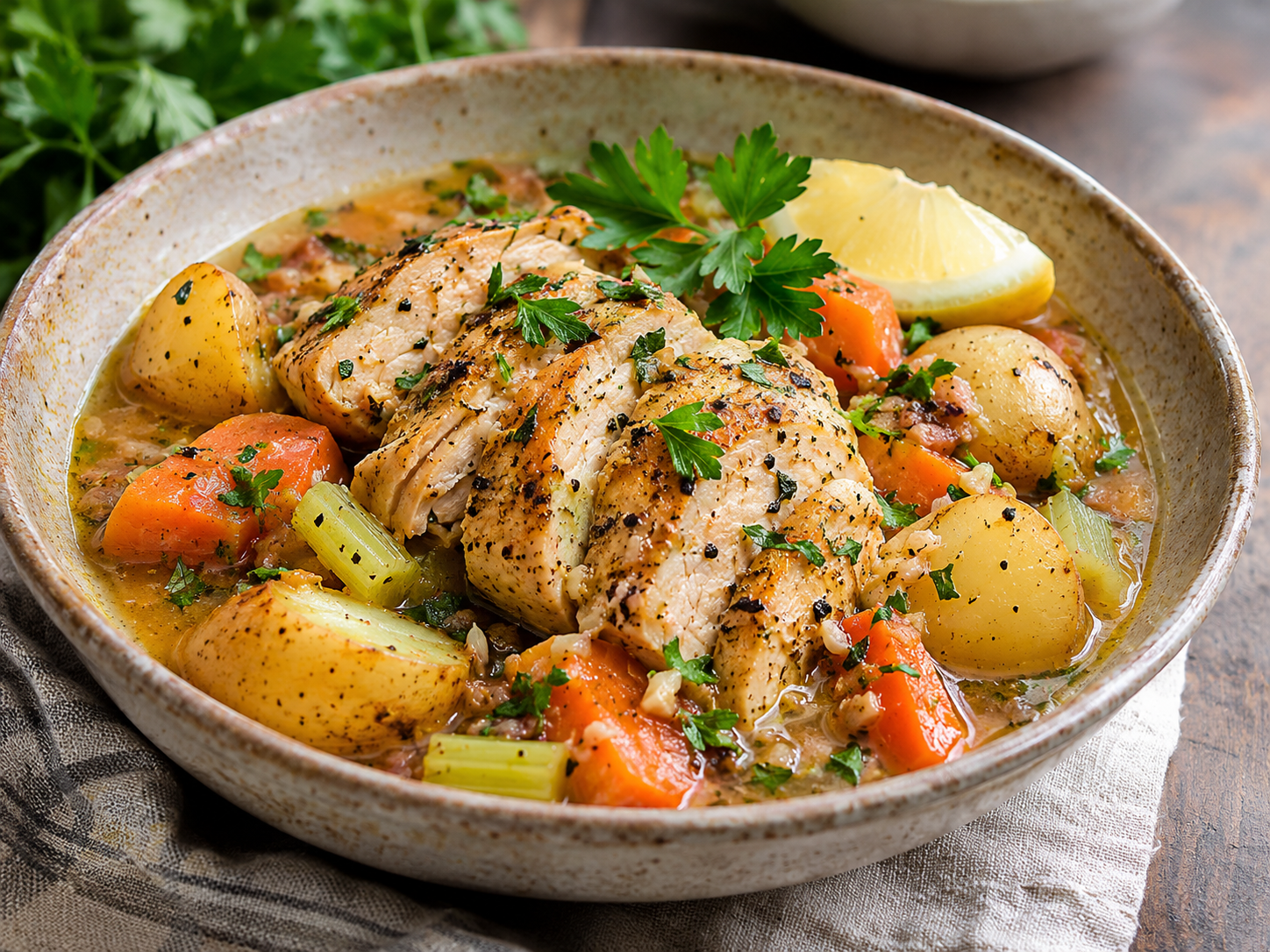
When you want a proper, comforting dinner but do not want to spend the evening washing dishes, this one-pot chicken recipe is worth keeping close. Chicken, potatoes, and vegetables simmer together with garlic, lemon, and herbs, making a light savoury broth that tastes as though it took much longer than it did.
The order matters here: brown the chicken first, soften the vegetables in the same pot, then let everything finish gently in the broth. Those browned bits on the bottom are full of flavour, so take a moment to scrape them up when you add the liquid. They make the finished dish taste richer without adding extra ingredients.
Boneless thighs are especially good in this recipe, although chicken breast works too if you keep an eye on it. The measurements include US and metric amounts, with temperatures in Fahrenheit and Celsius where relevant. Serve it in bowls with plenty of the broth and a little parsley over the top.
Why You’ll Love This Garlic Herb Chicken One-Pot Meal
- Easy to get started: The main seasoning uses olive oil, garlic, lemon, thyme, rosemary, parsley, and black pepper, pantry staples, and a little oil. There is no need for a long ingredient list or specialist equipment, so the recipe is approachable even on a busy weekday.
- Make it with the chicken you have: You can use chicken breasts or thighs. Breasts are lean and cook quickly, while thighs are more forgiving and tend to remain juicy if the cooking time runs a little longer.
- Dinner is all in one: The combination of baby potatoes, carrots, celery, onion, and spinach makes the dish feel complete. You can swap vegetables according to the season or what is available at your local supermarket.
- Make it your own: Adjust the pepper, garlic, herbs, and lemon to suit your preferences. Serve sauces or extra seasoning at the table so everyone can finish their portion as they like.
- Good for tomorrow’s lunch: The cooked chicken can be sliced into wraps, added to salads, or served with grains the next day. It also packs well for lunch the next day.
Serve warm, with the cooking juices spooned over the chicken so that each portion gets the full flavour of the seasoning.
Tips for the Best Garlic Herb Chicken
Choose chicken pieces that are similar in thickness. If one breast is much thicker than another, gently flatten the thick end between sheets of baking paper so it cooks more evenly. This reduces the chance of a dry outside and an undercooked centre.
Pat the chicken dry before seasoning. Surface moisture can dilute the seasoning and interfere with browning. Use paper towels, then season the chicken just before cooking or refrigerate it covered if preparing it a few hours ahead.
Use the garlic herb seasoning evenly. Rub it over both sides of the chicken and into any folds. If the recipe includes lemon juice, do not leave the chicken sitting in a very acidic marinade for an extended period; a short seasoning time is enough for this style of recipe.
Give everything a little breathing room in the pan. Food needs room for hot air or heat to circulate. If using a baking sheet, spread ingredients in one layer. If using a skillet, brown the chicken in batches rather than letting the pieces steam.
The most reliable way to check the chicken is with a thermometer, not by judging its colour. Check the thickest part of the chicken and cook poultry to 165°F (74°C). Remove each piece once it reaches temperature; smaller pieces may finish before larger ones.
Let the chicken sit for a few minutes before slicing. Five minutes allows the juices to settle. Cutting immediately can let more moisture escape onto the plate, leaving the meat less succulent.
Taste the vegetables and pan juices before serving. Potatoes and other starchy vegetables may need a final pinch of salt, while a squeeze of fresh lemon can brighten the whole dish. Add fresh herbs at the end so their flavour remains noticeable.
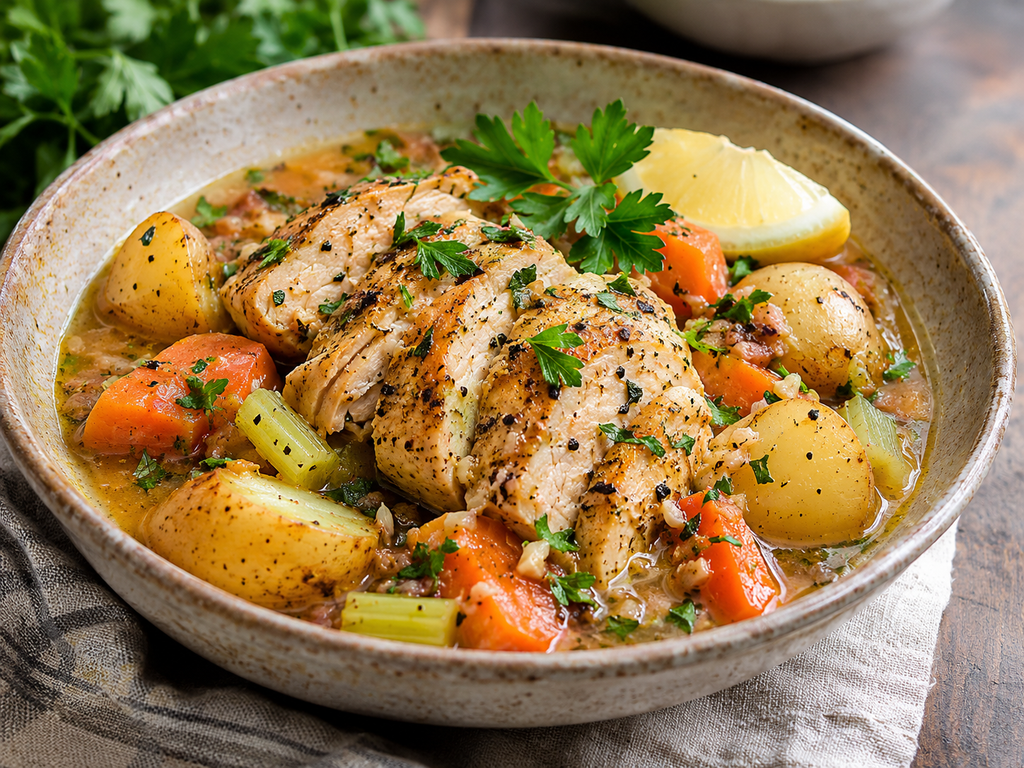
Variations to Try
Garlic Herb Chicken with Extra Vegetables
Add sliced bell pepper, zucchini (courgette), or mushrooms. For a sheet-pan or baked version, add quick-cooking vegetables partway through so they do not become too soft. For a skillet or one-pot version, add them after the onion and cook until just tender.
Creamy Herb Chicken
Stir 1/3 cup (80 ml) of cooking cream or unsweetened evaporated milk into the pan juices near the end. Keep the heat low and avoid a hard boil. This creates a creamy sauce that is particularly good with rice, mashed potatoes, or crusty bread.
Spicy Chicken
Add 1/2 teaspoon smoked paprika and a pinch of chilli flakes to the seasoning. For a milder family version, keep the chilli on the table and let each person add it to their own serving.
Mediterranean-Style Chicken
Add halved cherry tomatoes, sliced red onion, and a handful of pitted olives. Finish with chopped parsley and a little crumbled feta. If using feta, taste before adding extra salt because the cheese is already salty.
Boneless Thigh Version
Replace the chicken breasts with an equal weight of boneless thighs. They may need a few extra minutes depending on thickness. Check the temperature in the thickest part rather than assuming all pieces are ready at the same time.
What to Serve with Garlic Herb Chicken One-Pot Meal
- A crisp green salad: Mixed leaves, cucumber, and a simple vinaigrette add freshness and contrast with the savoury chicken.
- Rice, quinoa, or couscous: A modest serving of rice or another grain catches the cooking juices and makes the meal more filling. Brown rice adds a nutty flavour and works well for meal prep.
- Roasted or steamed vegetables: Green beans, broccoli, asparagus, or seasonal greens make easy sides. Choose a quick steamed vegetable if the main recipe already includes roasted vegetables.
- Mashed potatoes: Creamy mashed potatoes are a comforting option, especially with a skillet or one-pot version that has a little sauce.
- Warm flatbread or crusty bread: Bread is useful for soaking up pan juices. In the UK and Australia, serve with a crusty roll; in Singapore, a small portion of toasted bread or flatbread works just as well.
How to Make Garlic Herb Chicken One-Pot Meal Ahead of Time
You can get a few things ready ahead of time, which makes the actual cooking much less rushed. The best approach is to prepare the components separately and combine them shortly before cooking.
Prepare the vegetables
Wash and cut sturdy vegetables up to one day ahead. Store them in a covered container in the refrigerator. Keep cut potatoes submerged in cold water if preparing them early, then drain and dry thoroughly before roasting or adding them to the pan.
Mix the seasoning
Stir the oil, garlic, herbs, pepper, and lemon zest or juice together in a small container. Refrigerate it until needed. If the mixture contains fresh garlic, use it within a day for the best flavour.
Prepare the chicken safely
Keep raw chicken covered in the refrigerator and separate from ready-to-eat foods. You can season it a few hours before cooking, but do not leave it at room temperature. Wash hands, boards, and utensils after handling raw poultry.
Cook and portion for later
If preparing lunches, cook the chicken fully, cool it promptly, and portion it with grains or vegetables. Keep fresh salad toppings separate until serving so they stay crisp.
Can You Freeze Garlic Herb Chicken One-Pot Meal?
Yes. Cooked garlic herb chicken can be frozen, although vegetables with a high water content may soften after thawing. Cool the food promptly, divide it into meal-sized airtight freezer containers, label each container with the date, and freeze for up to 2 months for the best quality. For the best texture, freeze chicken and grains separately from fresh salad ingredients.
Thaw frozen portions in the refrigerator rather than on the kitchen counter. Reheat until steaming hot throughout and check that poultry reaches 165°F (74°C). If the chicken seems dry, add a tablespoon of water or broth before reheating. Fresh herbs and lemon juice are best added after reheating rather than before freezing.
How to Store and Reheat Leftovers
Once dinner is over, pack any leftovers into shallow, covered containers and get them into the fridge within 2 hours. Store cooked chicken and vegetables in the refrigerator for 3 to 4 days. Keep salad leaves, cucumber, and other fresh toppings in a separate container. In a warm climate, do not leave the cooked meal sitting out while serving; return portions to the refrigerator promptly.
For oven reheating, place the chicken and vegetables in an oven-safe dish, add a splash of broth or water, cover loosely with foil, and heat at 350°F (175°C) until steaming hot. A microwave is convenient for a single portion; cover loosely and heat in short intervals, turning or stirring where possible. Reheat only the amount you plan to eat.
If the recipe was prepared as meal-prep bowls, store the rice and chicken in separate compartments if possible. Add cucumber, tomatoes, leafy greens, and sauces after reheating. This keeps the fresh ingredients crisp and prevents the bowl from becoming watery.
Recipe
Garlic Herb Chicken One-Pot Meal
Prep Time: 20 minutes
Cook Time: 30 to 35 minutes
Total Time: About 45 to 60 minutes
Servings: 4
Yield: 4 servings
Course: Main Course
Cuisine: American-inspired
Method: Simmer
Ingredients
For the chicken:
- 1 1/2 lb (680 g) boneless, skinless chicken breasts or thighs
- 2 tablespoons olive oil
- 3 cloves garlic, finely minced
- 1 teaspoon lemon zest
- 1 tablespoon fresh lemon juice
- 1 teaspoon dried thyme
- 1/2 teaspoon dried rosemary
- 1 teaspoon dried parsley
- 1/2 teaspoon paprika
- 3/4 teaspoon salt, or to taste
- 1/2 teaspoon black pepper
For the vegetables and serving:
- 1 lb (450 g) baby potatoes, halved, if using
- 2 medium carrots, cut into bite-sized pieces, if using
- 1 small red onion, cut into wedges
- 2 cups (about 180 g) broccoli florets or the vegetables listed in the article
- 1 tablespoon olive oil, as needed
- 2 tablespoons chopped fresh parsley
- Lemon wedges, for serving
Instructions
- Cut the chicken into large bite-sized pieces if using breasts, or leave boneless thighs whole. Pat dry and season with salt, pepper, and half of the herbs.
- Warm the olive oil in a large heavy pot or deep sauté pan over medium heat. Brown the chicken in batches for 2 to 3 minutes per side. It does not need to cook through yet. Transfer to a clean plate.
- Add the onion, carrots, and celery to the same pot. Cook for 5 to 6 minutes, stirring and scraping up browned bits from the bottom. Add the garlic and cook for 30 seconds.
- Stir in the remaining herbs, lemon zest, and a tablespoon of flour if you prefer a thicker sauce. Cook for about 1 minute so the flour loses its raw taste.
- Pour in 2 cups (480 ml) chicken broth and stir until smooth. Add the potatoes and bring the liquid to a gentle simmer. Cover and cook for 10 to 12 minutes, or until the potatoes are beginning to soften.
- Return the chicken and any collected juices to the pot. Simmer gently until the chicken reaches 165°F (74°C) in the thickest piece and the vegetables are tender. Avoid a vigorous boil, which can make chicken breast tough.
- Stir in peas or spinach during the final few minutes, if using. Add lemon juice and taste the broth. Adjust salt, pepper, and acidity to your preference.
- Remove from the heat and let the pot stand for 3 to 5 minutes. Sprinkle with parsley. Ladle the chicken, vegetables, and light savoury sauce into shallow bowls.
Notes
- Chicken thickness affects cooking time more than the number of pieces. Use a food thermometer and remove each piece when it reaches 165°F (74°C).
- For UK readers, all-purpose flour is commonly called plain flour, and zucchini is known as courgette. The recipe works with either name and the same approximate quantity.
- For Australia and New Zealand, use fan-forced oven settings where available and begin checking a few minutes early because ovens vary.
- For Singapore, keep raw poultry refrigerated until cooking and cool leftovers quickly before storing. Avoid leaving cooked food at room temperature for an extended period.
- Use low-sodium chicken broth if you want more control over the salt level. Taste at the end before adding extra seasoning.
- The recipe is best freshly cooked, but leftovers are useful in sandwiches, wraps, salads, and grain bowls.