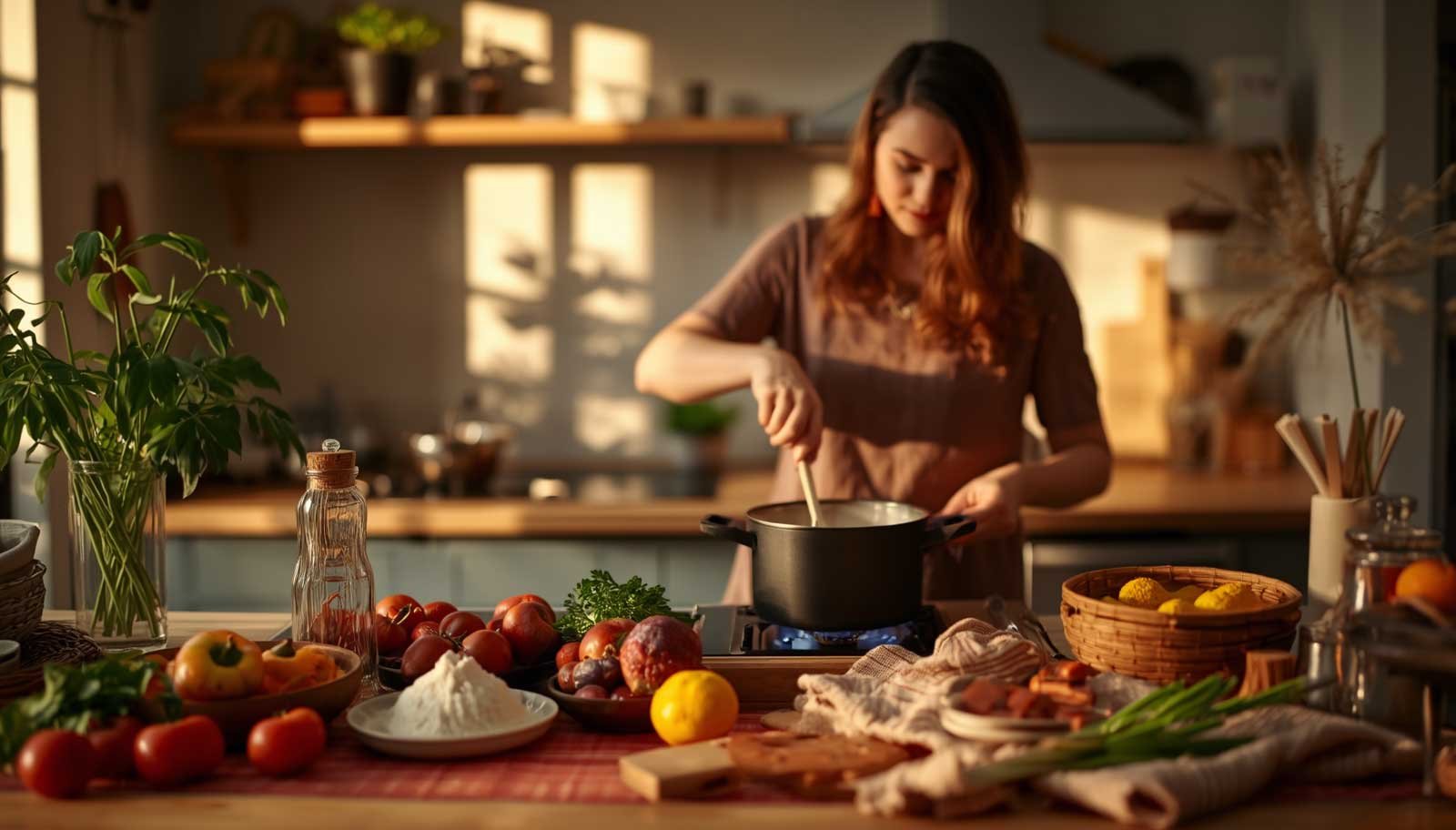
There is something comforting about slowing down in the kitchen at the end of a busy day. The sound of vegetables being chopped, the gentle simmer of a pot on the stove, and the smell of something warm cooking can make an ordinary evening feel a little more peaceful.
But a slow evening kitchen ritual isn’t about preparing an elaborate dinner or keeping a perfectly organized kitchen. It’s about creating a small pocket of time when you can step away from the rush of the day, make something nourishing, and enjoy the simple pleasure of being at home.
You don’t need a farmhouse kitchen, expensive cookware, or hours of free time to make it happen. A few thoughtful habits can turn everyday cooking into a comforting routine that helps you settle into the evening.
Whether you live alone, cook for a family, or simply want your evenings to feel less hurried, here’s how to build a kitchen ritual that works for your life.
What Is a Slow Evening Kitchen Ritual?
A slow evening kitchen ritual is a collection of simple, repeatable habits that make the transition from daytime responsibilities to evening rest feel more intentional.
It might begin with clearing the kitchen counter, washing a few fresh vegetables, or putting a pot of soup on the stove. You might open a window, play soft music, or make a cup of herbal tea while dinner cooks.
The important part isn’t what you do. It’s how you approach it.
Instead of treating dinner as another task to finish as quickly as possible, you give yourself permission to move at a comfortable pace when circumstances allow. You notice the ingredients you’re using, enjoy the process of cooking, and create a natural pause between the demands of the day and the rest of your evening.
Some nights, your ritual might last 45 minutes. On busier days, it might be only 10 minutes. Both count.
1. Start by Creating a Calm Kitchen Space
You don’t need to deep-clean your entire kitchen before you can enjoy cooking. In fact, trying to make everything perfect can turn a relaxing ritual into another chore.
Start with one small area.
Clear enough counter space to prepare dinner, put away anything that doesn’t belong there, and wash any dishes that would get in your way. Wipe the surface and gather the tools you’ll need for your meal.
If the sink is full or the kitchen feels cluttered, choose the one thing that will make cooking easier rather than tackling everything at once.
A few small details can also make the space feel more inviting:
- Put a clean kitchen towel beside the sink.
- Keep a wooden cutting board within easy reach.
- Place frequently used cooking utensils in one accessible container.
- Bring fresh herbs, seasonal fruit, or a small bowl of garlic to the counter.
- Open a window when the weather allows and it’s practical to do so.
These little changes help the kitchen feel ready for the evening without requiring a major cleaning session.
2. Choose a Gentle Starting Signal
One of the easiest ways to establish a ritual is to choose a small action that signals the beginning.
It could be tying on an apron, turning on a favorite lamp, putting on a familiar playlist, or making a cup of tea before you start cooking.
Repeating the same action each evening gives your routine a recognizable beginning. Over time, it can become a helpful cue that tells you it’s time to shift away from work, errands, or screen time and focus on the present moment.
Choose something that feels natural rather than adding another complicated step to your day.
For example, when you arrive home, you might wash your hands, change into comfortable clothes, and head into the kitchen to prepare dinner. That simple sequence can become your starting ritual.
If you enjoy music, keep a short playlist ready. If silence feels better after a noisy day, let the kitchen stay quiet except for the sounds of cooking.
There is no single right atmosphere. The best one is the one that helps you feel comfortable.
3. Let the Ingredients Guide Dinner
A slow kitchen ritual becomes easier when you stop expecting every dinner to be a new recipe or a special occasion.
Instead of planning complicated meals every night, start with what you already have.
Check your refrigerator, look at the vegetables in your basket, and notice which ingredients need to be used soon. A few seasonal vegetables, leftover cooked grains, eggs, beans, or a piece of chicken can become the foundation of a simple meal.
You could build dinner around:
- A pot of vegetable soup with warm bread.
- Roasted seasonal vegetables with rice or quinoa.
- A simple frittata with greens and cheese.
- A one-pan chicken dinner with potatoes and herbs.
- A bowl of pasta tossed with garlic, olive oil, and vegetables.
- Lentils simmered with onions, tomatoes, and warming spices.
The idea is to cook something satisfying without making the process unnecessarily demanding.
You can also keep a small list of reliable meals on your refrigerator. When you’re tired, choose one rather than spending half the evening deciding what to cook.
4. Prepare Ingredients Without Rushing
Once you’ve chosen dinner, take a few minutes to prepare your ingredients.
Wash the vegetables, slice the onions, measure the spices, and arrange everything where you can reach it. You don’t have to prepare every ingredient perfectly before turning on the stove, but a little organization can make cooking feel smoother.
Try to pay attention to the small details.
Notice the fresh scent of lemon as you zest it. Listen to the sound of onions hitting a warm pan. Watch how leafy greens soften when they meet a little heat.
These are ordinary parts of cooking, but noticing them can make the experience feel less automatic.
You might even use this time to learn a small skill, such as chopping vegetables more evenly, making a simple vinaigrette, or getting comfortable with cooking grains without a recipe.
Don’t force yourself to slow every movement. Just give yourself enough space to enjoy the work instead of rushing through it.
5. Let the Stove Set the Pace
Some of the most comforting parts of cooking happen when you don’t need to do anything for a few minutes.
A soup needs time to simmer. Vegetables need time to roast. Rice needs to cook with the lid on. Dough needs to rest.
Rather than filling every spare moment with another task, use these natural pauses as part of your ritual.
While soup simmers, you could prepare tomorrow’s lunch, wash a few utensils, or simply sit nearby with a cup of tea. While vegetables roast, you might set the table or take a few minutes to relax.
The goal isn’t to stand around waiting for dinner. It’s to avoid making every minute feel like a race.
Choose meals that fit the amount of time and energy you have. On a busy evening, a quick skillet meal may be more suitable than a dish that requires an hour of attention.
A slow ritual should make your life feel easier, not create pressure to cook slowly when you need to be somewhere else.
6. Bring a Little Warmth to the Table
The kitchen ritual doesn’t have to end when the food is ready.
Take a moment to make the table feel welcoming, even if you’re eating alone. Put your meal on a proper plate or in a favorite bowl, pour yourself a glass of water, and sit down somewhere comfortable.
You don’t need special dinnerware or a carefully styled table. A clean placemat, a folded napkin, or a small vase with garden flowers can be enough.
If you’re eating with family or friends, consider making the meal a time to reconnect. You could ask everyone about one good thing that happened during the day or simply enjoy a conversation without distractions.
If you’re eating alone, let that time belong to you. Put away your phone for a few minutes if you can, eat at a comfortable pace, and give yourself a chance to enjoy the food you prepared.
A meal doesn’t need to be elaborate to feel meaningful. Sometimes, a bowl of homemade soup and a slice of toast are exactly what the evening needs.
7. Use Seasonal Ingredients to Keep the Ritual Fresh
Cooking with seasonal ingredients can make your evening routine feel connected to the time of year.
In cooler months, you might reach for squash, carrots, potatoes, apples, and sturdy greens. These ingredients work well in soups, baked dishes, roasted vegetables, and warm desserts.
During warmer weather, fresh tomatoes, cucumbers, zucchini, berries, herbs, and leafy greens can inspire lighter meals.
You don’t need to follow a strict seasonal calendar. Availability varies by region, and the best ingredients are often the ones that are fresh, affordable, and easy to find where you live.
Try choosing one ingredient each week and finding two or three ways to use it. A bunch of fresh spinach might become an omelet one evening, a pasta dish the next, and a simple side dish later in the week.
This approach helps reduce food waste, makes grocery shopping more purposeful, and gives you new ideas without requiring a completely different menu every night.
8. Make Cleanup Part of the Ritual
A peaceful evening is much easier to enjoy when you’re not faced with a mountain of dishes later.
Instead of leaving every bit of cleanup until after dinner, handle a few small tasks while you cook. Put empty ingredient containers away, wipe up spills, and wash tools that you no longer need.
Once the meal is finished, clear the table and deal with the remaining dishes in a way that suits your energy level.
You could wash a few things by hand while listening to music or load the dishwasher and wipe the counters before sitting down for the night.
Try setting a gentle limit, such as 10 minutes of kitchen tidying. When the time is up, focus on the essentials and leave nonurgent tasks for another day.
Food safety still matters during a relaxed routine. Refrigerate perishable leftovers promptly, generally within two hours, and sooner in very hot conditions. Store food in suitable covered containers and clean surfaces used for raw meat or other potentially hazardous ingredients.
The purpose of cleanup is to leave the kitchen reasonably ready for tomorrow, not to make it spotless every night.
9. Add One Small Pleasure to Your Evening
A ritual becomes more personal when it includes something you genuinely enjoy.
It doesn’t have to be food-related, although the kitchen offers plenty of possibilities.
You might bake a small batch of apple muffins on Sunday, keep fresh herbs in a pot near the window, or make a simple dessert when seasonal fruit is especially good.
Other ideas include:
- Making a favorite tea after dinner.
- Listening to an audiobook while preparing vegetables.
- Writing down a meal that turned out particularly well.
- Keeping a notebook of recipes you want to try.
- Setting aside a few minutes to plan tomorrow’s lunch.
- Enjoying a piece of dark chocolate after the dishes are done.
Choose one pleasure rather than trying to incorporate everything. The ritual should feel like a small gift to yourself, not another routine you have to maintain perfectly.
10. Adapt the Ritual to Your Real Life
The most sustainable kitchen rituals are flexible.
Some evenings, you’ll have time to make a meal from scratch. Other nights, you may be tired, short on time, or responsible for several things at once.
On those days, let your ritual become smaller.
You could prepare a simple sandwich with soup, warm leftovers, make scrambled eggs on toast, or assemble a bowl using cooked grains and whatever vegetables you have available. You can still set the table, take a few deep breaths, and enjoy your meal without rushing.
If you live with other people, invite them to take part in small ways. Someone can wash the vegetables while another sets the table. Shared tasks can make the routine easier and give everyone a sense of participation.
If you live alone, enjoy the freedom to choose exactly what suits your mood. You don’t need to cook a full dinner every night for the ritual to count.
Consistency matters more than complexity. A routine you enjoy three or four evenings a week is more useful than an elaborate plan that leaves you exhausted after two days.
A Simple 30-Minute Slow Evening Kitchen Routine
If you’re unsure where to begin, try this gentle routine. Adjust the timing depending on your meal and your schedule.
Minutes 1–5: Reset the space
Clear the counter, wash your hands, and gather your ingredients. Put on music or enjoy a quiet kitchen.
Minutes 6–10: Prepare the ingredients
Wash and chop vegetables, measure seasonings, and get your cooking tools ready.
Minutes 11–20: Start cooking
Heat the pan, sauté aromatics, roast vegetables, or begin simmering a simple soup. Use the natural pauses to set the table or wash a few utensils.
Minutes 21–25: Finish the meal
Check the seasoning, prepare any final toppings, and plate the food.
Minutes 26–30: Settle in
Sit down, put away distractions, and begin your meal at a comfortable pace.
This is only an example, not a strict schedule. If your dinner takes longer, let it. If you have only 10 minutes, choose a quicker meal and keep the same general idea.
Common Mistakes to Avoid
Trying to Make Every Evening Special
A ritual doesn’t need a new recipe, fresh flowers, or a beautifully styled table every day. Repeating a few simple habits is often more comforting than constantly trying to improve the experience.
Choosing Meals That Require Too Much Effort
If a recipe leaves you stressed, save it for a weekend. Keep a few quick meals available for evenings when your energy is low.
Treating Cleanup as a Test of Success
A reasonably clean kitchen is helpful, but a slow evening doesn’t fail because a pan needs soaking or a few dishes remain. Take care of food safety and the most important tasks first.
Following Someone Else’s Routine Too Closely
Your home, schedule, budget, and energy levels are different from anyone else’s. Borrow ideas that help you and ignore the ones that don’t.
Feeling Guilty When You Skip a Night
Life changes from day to day. If you miss your ritual, simply return to it when you can. There’s no need to make up for a missed evening or start over from the beginning.
Final Thoughts
Building a slow evening kitchen ritual is less about changing the way you cook and more about changing how you experience the end of the day.
A cleared counter, a simple homemade meal, the smell of onions softening in a pan, or a few quiet minutes at the table can become small reminders to pause and enjoy being at home.
Start with one habit that feels good. Let it become familiar before adding anything else, and give yourself permission to keep things simple when life gets busy.
Over time, these ordinary moments can become a comforting part of your evenings. You don’t need a perfect kitchen or a complicated recipe. You just need a little time, a meal that suits your day, and the willingness to slow down when you can.