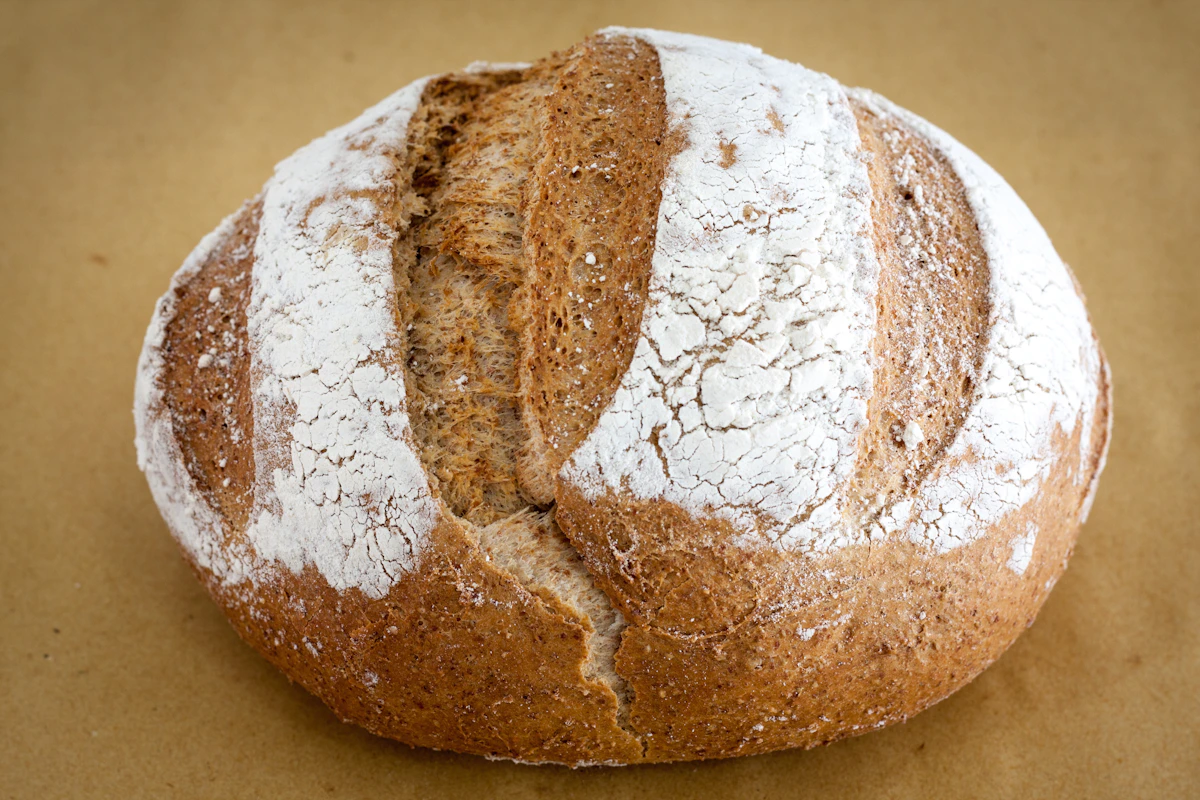
Throughout Central and Eastern Europe, rye bread is not a mere side dish; it is the sacred backbone of daily life. Dark, hearty, and deeply fragrant with crushed caraway seeds, a true artisan rye sourdough possesses a character completely distinct from standard white wheat loaves. With its thick, blistered mahogany crust, dense and tender crumb, and complex sour tang that deepens over several days, it is the ultimate bread for smoked fish, sharp farmhouse cheeses, and hearty winter stews.
Rye flour behaves entirely differently from common wheat. Lacking the gluten-forming proteins of wheat flour, rye is rich in pentosans—complex carbohydrate gums that absorb vast amounts of water and require the natural lactic acid of a wild sourdough culture to set its crumb. By pairing stone-ground dark rye with high-protein unbleached bread flour, toasted caraway seeds, and fennel, you achieve a loaf with glorious oven spring, chewy texture, and old-world soul.
The Science of Rye Baking: Why Sourdough is Mandatory
Commercial baker’s yeast alone cannot make great rye bread. Rye flour contains high levels of amylase enzymes that rapidly break down starches into sugars during baking, leading to what bakers call “starch attack”—a gummy, wet, collapsed loaf. The natural lactic and acetic acids produced by a wild sourdough starter lower the dough’s pH, deactivating these aggressive amylase enzymes and allowing the rye starches to gelatinize into a moist, sliceable crumb.
Rustic Seeded Caraway Rye Sourdough Bread
Ingredients
9 itemsFor the Seeded Rye Dough
Instructions
12 steps-
01
Mix the Autolyse: In a large ceramic mixing bowl, combine the rye flour, bread flour, and lukewarm water. Stir with a wooden spatula until a shaggy dough forms with no dry pockets. Cover with a damp cloth and let rest (autolyse) for 45 minutes to allow the rye pentosans to fully hydrate.
-
02
Add Starter, Seeds, and Salt: Add the active sourdough starter, toasted caraway seeds, crushed fennel seeds, molasses, and sea salt. Using moistened hands, squeeze and fold the dough repeatedly for 3 to 4 minutes until all ingredients are completely integrated into a cohesive, slightly sticky dough.
-
03
Bulk Fermentation with Coil Folds: Cover the bowl. Over the next 2 hours, perform 3 sets of coil folds spaced 40 minutes apart: with wet hands, lift the dough from the center, let the ends fold underneath, and set down. Rotate 90 degrees and repeat. The dough will become noticeably smoother and hold its shape. Let rest undisturbed for another 2 to 3 hours in a warm spot (75°F to 78°F) until aerated, domed, and increased in volume by about 40% to 50%.
-
04
Pre-Shape and Bench Rest: Gently ease the dough out onto a lightly floured surface. Using a bench knife, shape into a loose round ball. Let rest uncovered on the bench for 20 minutes to relax the gluten.
-
05
Final Shape: Dust a round proofing basket (banneton) generously with a 50/50 mix of rice flour and rye flour. Pull the bottom edge of the dough up, fold the sides inward, and roll down into a tight boule with smooth surface tension. Place seam-side up into the dusted banneton.
-
06
Cold Retard (Overnight Rise): Slide the banneton into a plastic bag or shower cap and place in the refrigerator for 8 to 14 hours (or proof at room temperature for 2 hours until puffy). Cold fermentation deepens the complex lactic tang.
-
07
Preheat Dutch Oven: Place a heavy 5- to 6-quart enameled cast iron Dutch oven with its lid inside the oven. Preheat to 475°F (245°C) for at least 45 minutes.
-
08
Score and Bake: Invert the chilled dough onto a sheet of parchment paper. Dust surface lightly with rye flour. Using a razor blade or sharp baker’s lame, score a deep 1/2-inch crescent or crosshatch pattern across the top to allow expansion. Carefully lift the parchment paper and lower the dough into the blazing hot Dutch oven. Cover immediately with the lid.
-
09
Steam and Bake: Bake covered at 475°F for 20 minutes to trap steam. Remove the lid, reduce oven temperature to 425°F (220°C), and bake uncovered for another 22 to 25 minutes until the crust is deep dark mahogany brown and sounds hollow when tapped on the bottom.
-
10
The 4-Hour Cool (Essential for Rye!): Do not cut rye bread warm! Rye crumb is extremely moisture-dense and needs hours to set. Let the loaf cool completely on a wire rack for at least 4 to 6 hours (or ideally 12 hours) before slicing.
Chef’s Notes
-
11
Why Wait to Slice? Slicing warm rye bread causes the knife to drag through sticky starches, creating a gummy, wet interior. Patience rewards you with a silky, clean, perfect slice.
-
12
Caraway Aroma: Toasting caraway seeds in a dry skillet for 2 minutes before kneading releases their volatile aromatic oils, transforming the bread’s aroma.
Frequently Asked Questions
How long does rye sourdough keep fresh?
Due to rye’s natural moisture retention and the acidity of sourdough, this bread stays fresh on the counter wrapped in a linen towel for up to 7 days without molding or drying out! It actually tastes better on days 2 and 3.