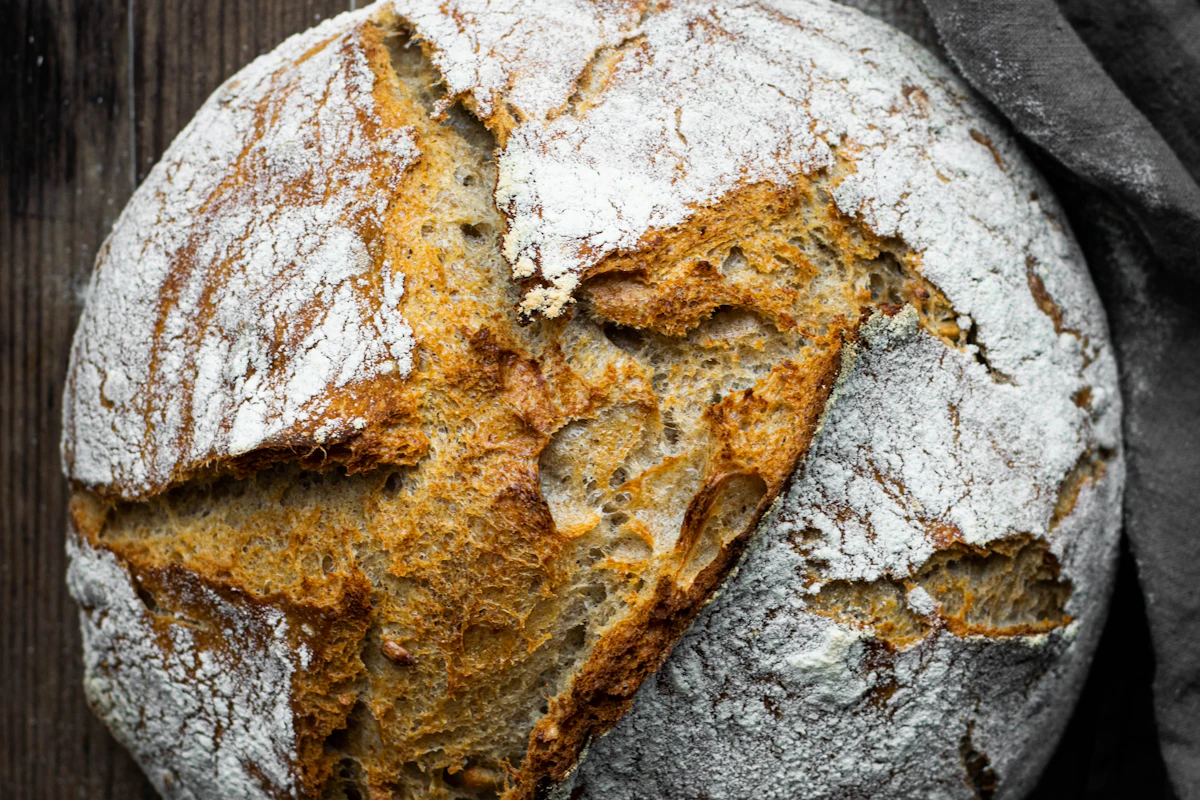
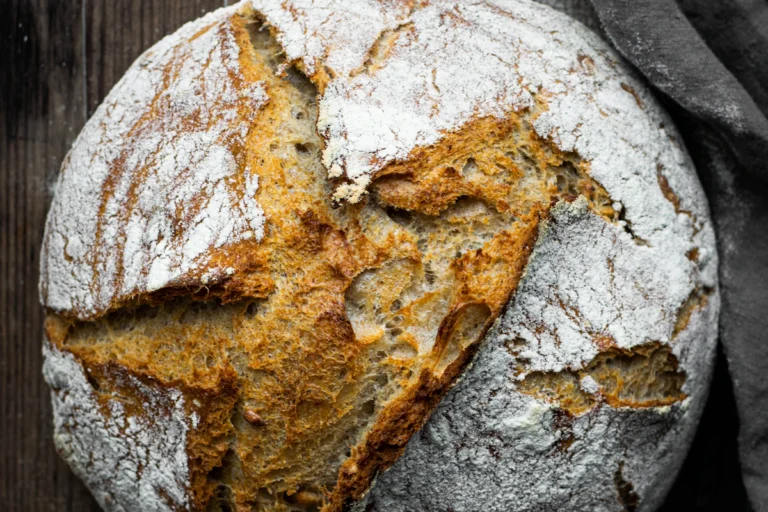
There is an ancient, meditative rhythm to baking naturally leavened sourdough bread. Flour, water, salt, and wild yeast come together through time and temperature, yielding a blistered, mahogany loaf that crackles and sings as it cools on the counter. While a classic rustic country loaf is magnificent, folding briny Kalamata olives and fragrant garden rosemary directly into the dough elevates homemade baking into pure Mediterranean artisan luxury.
Every slice of this Rustic Olive and Rosemary Artisan Sourdough reveals an open, custardy crumb studded with dark purple kalamatas, flecks of fresh piney rosemary, and a subtle hint of citrus zest. When toasted and slathered with salted European butter, dunked into warm soups, or used for roasted meat sandwiches, it is the crowning achievement of the farmhouse kitchen.
The Science of Incorporating Olives into Dough
Baking with mix-ins like olives requires careful technique. Because olives are packed with brine and natural oils, adding them incorrectly can inhibit gluten development and produce dense, gummy bread. Follow these baker’s secrets for success:
- Dry the Olives Thoroughly: Drain pitted Kalamata olives and pat them completely dry between layers of paper towels. Excess surface brine dilutes the dough’s hydration and weakens gluten strands.
- Fold During Lamination or Final Stretch: Never add olives at the beginning of mixing! Allow the dough to develop strong gluten structure through initial folds, then laminate or fold the olives in during the second or third stretch-and-fold cycle.
- Use Fresh Rosemary: Dried rosemary has hard, needle-like textures that do not soften well during baking. Fresh garden rosemary leaves, finely chopped, release their essential oils directly into the warm crumb.
Why Cast Iron Dutch Oven Baking Excels
Professional bakery deck ovens inject steam during the first 20 minutes of baking. Steam keeps the exterior dough supple, allowing the loaf to expand vigorously (oven spring) before the crust sets. At home, a heavy cast-iron Dutch oven functions as a personal steam chamber: trapped moisture escaping from the dough remains enclosed beneath the tight lid, producing spectacular rise and a shatteringly crisp, blistered crust.
Ingredients You’ll Need
Pure ingredients for natural leavening:
The Dough
- Bread Flour: 400 grams (about 3 cups) of unbleached high-protein bread flour.
- Whole Wheat Flour: 50 grams (about 1/3 cup) of stone-ground whole wheat flour for rustic earthy depth.
- Lukewarm Filtered Water: 330 grams (about 1 1/3 cups) at 80°F (27°C).
- Active Sourdough Starter: 100 grams of bubbly, mature starter fed 4 to 6 hours prior.
- Fine Sea Salt: 10 grams (about 1.5 teaspoons).
The Inclusions
- Kalamata & Castelvetrano Olives: One cup of pitted olives, roughly chopped and dried thoroughly.
- Fresh Garden Rosemary: One and a half tablespoons of finely chopped fresh rosemary.
- Fresh Lemon Zest: One teaspoon of finely grated lemon zest.
- Flaky Sea Salt & Semolina: For dusting the crust and scoring.
Step-by-Step Baking Schedule
A classic, unhurried sourdough journey:
Step 1: Autolyse and Mix
In a large mixing bowl, combine the bread flour, whole wheat flour, and 310 grams of the water (reserve 20 grams for later). Stir until no dry flour remains. Cover and let rest (autolyse) for 45 minutes to hydrate starches and initiate enzymatic activity. Add the active sourdough starter, remaining 20 grams of water, and fine sea salt. Squeeze and dimple the dough with wet fingers until starter and salt are fully incorporated.
Step 2: Stretch, Fold & Laminate Inclusions
Perform four sets of stretch-and-folds spaced 30 minutes apart during the first two hours of bulk fermentation. On the third set, spread the dough out gently on a lightly misted counter, scatter the dried chopped olives, fresh rosemary, and lemon zest evenly across the surface, then fold the dough into a tight envelope to trap the inclusions securely inside.
Step 3: Bulk Fermentation & Pre-Shape
Let the dough finish bulk fermenting in a warm spot (75°F to 78°F) for another 2 to 3 hours until it has increased in volume by 50 to 60 percent, domed at the edges, and feels airy and full of fermentation bubbles. Tip out onto a lightly floured surface. Pre-shape into a loose round and let rest uncovered on the bench for 20 minutes.
Step 4: Final Shape & Overnight Cold Proof
Shape into a tight batard or boule by folding the sides toward the center and rolling downward to build surface tension. Dust an oval banneton proofing basket with rice flour. Place shaped dough seam-side up into the basket. Cover with a plastic bag and refrigerate for 12 to 16 hours for cold retarded fermentation (develops rich, complex lactic sour notes).
Step 5: Score and Bake with Steam
Place a cast-iron Dutch oven and its lid into your oven; preheat to 475°F (245°C) for 1 hour. Invert cold dough onto a sheet of parchment paper. Dust lightly with semolina. Use a sharp baker’s razor (lame) to score a confident 1/2-inch deep crescent down the center of the loaf. Carefully lower parchment with dough into the hot Dutch oven. Cover immediately with the lid and bake for 20 minutes with steam.
Step 6: Vent and Brown
Carefully remove the Dutch oven lid. Reduce oven temperature to 450°F (230°C) and bake uncovered for another 20 to 22 minutes until crust is deep mahogany-gold and blisters crackle. Transfer loaf to a wire cooling rack. Cool for at least two hours before slicing to allow internal starches to set.
Rustic Olive and Rosemary Artisan Sourdough
Ingredients
9 itemsInstructions
8 steps-
01
Mix flours and 310g water into a shaggy dough. Rest (autolyse) covered for 45 minutes.
-
02
Add active starter, remaining 20g water, and salt. Dimple and knead until incorporated.
-
03
Perform 4 sets of stretch-and-folds every 30 minutes. On the 3rd set, laminate the dried chopped olives, chopped rosemary, and lemon zest into the dough.
-
04
Allow bulk fermentation to complete (approx. 4-5 hours total from mixing) until bubbly and increased by 50%.
-
05
Pre-shape into a round, rest 20 minutes, then final-shape into a tight boule. Place in a rice-floured banneton, cover, and chill in refrigerator for 12-16 hours.
-
06
Preheat oven with Dutch oven inside to 475°F (245°C) for 1 hour.
-
07
Turn dough onto parchment, score top with a lame, and bake covered in Dutch oven for 20 minutes.
-
08
Remove lid, lower oven to 450°F (230°C), and bake uncovered for 20-22 minutes until blistered and deep mahogany. Cool on a wire rack for 2 hours before slicing.
Chef's Notes & Tips
- Hydration Level: This recipe sits at approximately 75% hydration, making it manageable for intermediate bakers while yielding an open, airy crumb.
- Olive Choices: A 50/50 mix of rich purple Kalamatas and buttery green Castelvetrano olives creates stunning visual and flavor contrast.