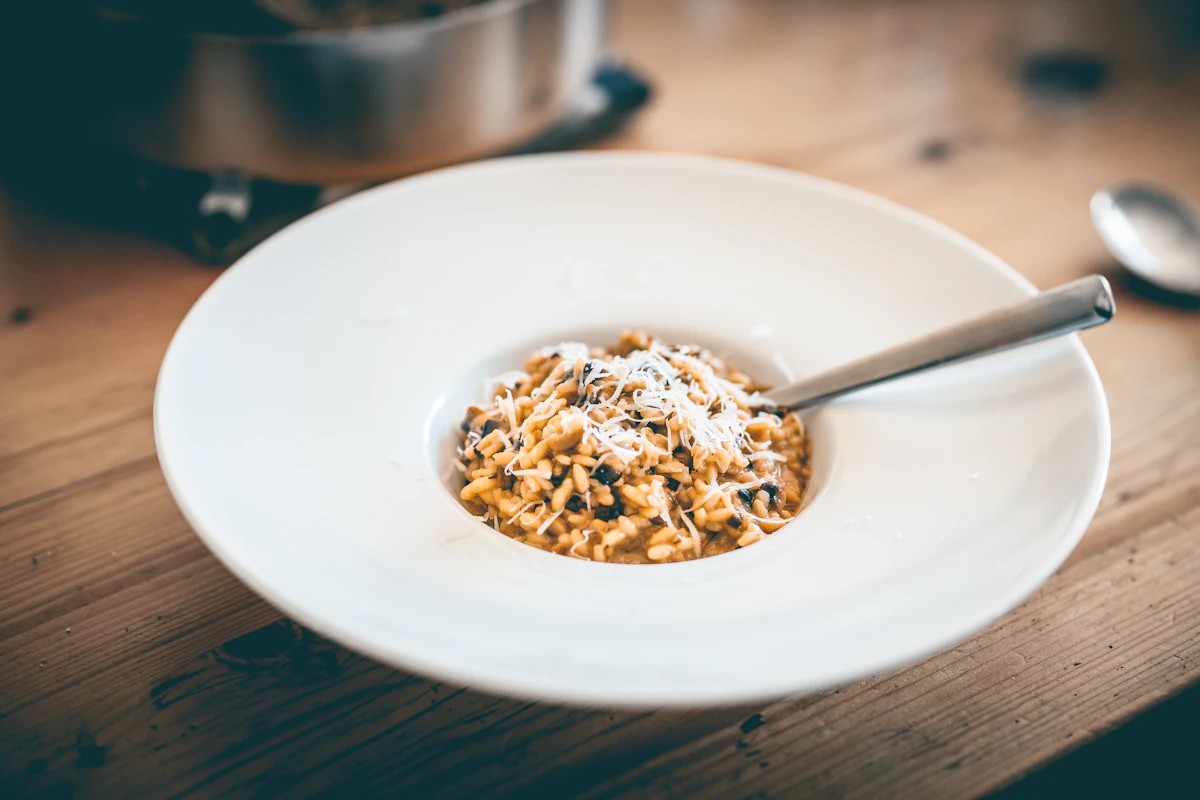
When autumn winds rattle the kitchen windowpanes and darkness falls before the clock strikes six, nothing soothes the soul quite like standing over a gently bubbling pot of risotto. Originating in Northern Italy, risotto has earned an unfair reputation as a fussy, labor-intensive restaurant dish. In reality, it is one of the most meditative, grounded meals a home cook can prepare. It requires only patience, quality arborio rice, warm broth ladled with rhythmic care, and the deep, caramelized sweetness of roasted winter squash.
This Roasted Butternut Squash Risotto with Crispy Sage marries two preparations of squash for ultimate textural balance: half is slow-roasted until tender and puréed into a velvety golden emulsion that coats every grain of rice, while the remainder is diced small, caramelized with nutmeg and olive oil, and folded in at the end. Crowned with crackling leaves of fresh sage fried in nutty brown butter and a snowy mountain of aged Parmigiano-Reggiano, it is the quintessential autumn comfort meal.
The Starch Science: Why Carnaroli or Arborio Matters
You cannot make authentic risotto with standard long-grain white rice or jasmine rice. Risotto depends upon high-amylopectin, medium-grain Italian rice varieties:”most notably Arborio or the chef’s favorite, Carnaroli. As these short, pearlescent grains absorb hot broth and rub against one another through gentle stirring, their outer surface sheds surface starches. This starch combines with hot butter and fat to form all’onda“the luxurious, wavy emulsion that makes risotto creamy without needing heavy cream.
- Never Rinse the Rice: Rinsing washes away the essential surface starch necessary to create the signature creamy texture.
- Toast Before Liquid (Tostatura): Sautéing dry rice in hot olive oil for 2 to 3 minutes until translucent with a white pearly center seals the grain cores so they absorb broth slowly without turning mushy.
- Keep the Broth Simmering: Always keep your stock at a gentle simmer on an adjacent burner. Adding cold or lukewarm broth drops the pan temperature, disrupting starch release and unevenly cooking the rice.
Why Two Textures of Squash Transform This Dish
Many butternut squash risottos make the mistake of simply tossing in boiled squash cubes, resulting in pale color and bland flavor. Roasting concentrated the vegetable’s natural fructose, transforming earthy sweetness into rich caramel notes. Dividing the squash creates dual sensory delight:
- Velvety Squash Purée: Half the roasted squash is blended with a splash of warm broth until silky smooth. Stirred into the rice halfway through cooking, it turns the entire pot a luminous golden amber.
- Caramelized Roasted Cubes: The remaining roasted cubes retain their shape and provide pleasant toothsome contrast against the soft rice grains.
Ingredients You’ll Need
Fresh autumn produce, Italian pantry staples, and quality dairy come together in harmony:
The Roasted Squash
- Butternut Squash: One medium butternut squash (about 2.5 pounds), peeled, seeded, and diced into 1/2-inch cubes.
- Extra Virgin Olive Oil: Two tablespoons to coat before roasting.
- Pure Maple Syrup: One tablespoon to enhance caramelization.
- Ground Nutmeg: A quarter teaspoon of freshly grated nutmeg (nutmeg is the classic soulmate of winter squash).
- Fine Sea Salt & Black Pepper: Half a teaspoon each.
The Risotto Base
- Carnaroli or Arborio Rice: One and a half cups of authentic Italian risotto rice.
- Vegetable or Chicken Broth: Six cups of low-sodium broth, kept at a gentle simmer in a saucepan.
- Shallots: Two medium shallots (or one small yellow onion), finely minced.
- Fresh Garlic: Two cloves of garlic, finely minced.
- Dry White Wine: Half a cup of crisp, unoaked white wine (such as Pinot Grigio or Sauvignon Blanc).
- Unsalted European Butter: Four tablespoons, divided (two tablespoons for cooking, two tablespoons ice-cold for mounting).
- Fresh Sage Leaves: Twelve to fifteen fresh whole sage leaves.
- Parmigiano-Reggiano: Three-quarters cup of freshly grated authentic Parmesan cheese.
Step-by-Step Cooking Instructions
Follow these classic steps for a restaurant-quality finish:
Step 1: Roast the Squash
Preheat your oven to 400°F (200°C). Toss diced butternut squash with 2 tablespoons olive oil, maple syrup, nutmeg, sea salt, and black pepper on a large baking sheet. Spread in an even single layer. Roast for 25 to 30 minutes, turning once, until squash is tender and caramelized at the edges. Transfer half of the roasted squash to a blender with 1/2 cup of warm broth and blend until velvety smooth. Set the remaining roasted cubes aside.
Step 2: Crisp the Sage in Brown Butter
In a large wide saucepan or Dutch oven, melt 2 tablespoons of butter over medium heat. When butter begins to foam, add whole sage leaves in a single layer. Fry for 45 to 60 seconds until leaves are crisp and fragrant and butter is lightly browned. Remove fried sage with a fork to a paper towel, leaving the flavorful browned butter in the pot.
Step 3: Sauté Aromatics & Toast the Rice
Add minced shallots to the brown butter in the pot. Cook over medium-low heat for 3 to 4 minutes until soft and translucent. Add minced garlic and cook for 1 minute. Add dry arborio rice; stir continuously for 2 minutes to toast the grains until the outer edges become translucent and smell lightly nutty.
Step 4: Deglaze & The Rhythmic Simmer
Pour in the dry white wine, scraping the bottom of the pot. Simmer gently for 1 to 2 minutes until wine is almost completely absorbed. Begin adding warm broth, one ladleful (about 3/4 cup) at a time, stirring gently and frequently. Allow each ladleful to be absorbed before adding the next. Adjust heat to maintain a steady, gentle bubble.
Step 5: Fold in Squash & Mantecatura
At the 12-minute mark (after about 3 to 4 ladles of broth), stir in the velvety butternut squash purée. Continue adding broth and stirring for another 6 to 8 minutes until rice is tender with a pleasant al dente bite at the center. Remove pan from heat. For the traditional mantecatura, vigorously stir in the remaining 2 tablespoons of cold cubed butter, grated Parmigiano-Reggiano, and reserved squash cubes. Cover with a lid and let rest for 2 minutes.
Step 6: Plate and Garnish
Spoon the warm, flowing risotto onto shallow warm bowls. Tap the bottom of each plate with your palm so the risotto spreads into a smooth, elegant pool. Crown with crispy fried sage leaves, extra grated Parmesan, and freshly cracked black pepper. Serve immediately.
Roasted Butternut Squash Risotto with Crispy Sage
Ingredients
14 itemsInstructions
7 steps-
01
Preheat oven to 400°F (200°C). Toss butternut squash with olive oil, maple syrup, nutmeg, salt, and pepper. Roast on a sheet pan for 25-30 minutes until tender. Purée half the squash with 1/2 cup warm broth; reserve remaining cubes.
-
02
In a Dutch oven, melt 2 tablespoons butter over medium heat. Fry sage leaves for 60 seconds until crisp. Remove leaves to a plate; keep browned butter in the pot.
-
03
Add shallots to the pot and sauté for 3 minutes until translucent. Add garlic for 1 minute. Add rice and toast for 2 minutes, stirring constantly.
-
04
Pour in white wine; simmer until absorbed. Add warm broth one ladle at a time, stirring frequently as each ladle is absorbed.
-
05
At 12 minutes, stir in the smooth squash purée. Continue ladling broth for 6-8 minutes until rice is creamy and al dente.
-
06
Remove from heat. Vigorously fold in cold butter, grated Parmesan, and reserved squash cubes. Cover and rest for 2 minutes.
-
07
Ladle into warm bowls, top with crispy fried sage leaves and cracked pepper, and serve immediately.
Chef's Notes & Tips
- Wine Substitute: If cooking without alcohol, replace white wine with an equal amount of warm broth plus 1 teaspoon of freshly squeezed lemon juice.
- Cheese Options: Pecorino Romano or aged gouda can be substituted for a slightly sharper or fruitier finish.
- Leftover Arancini: Cold leftover risotto makes magnificent Italian arancini (fried rice balls stuffed with mozzarella).