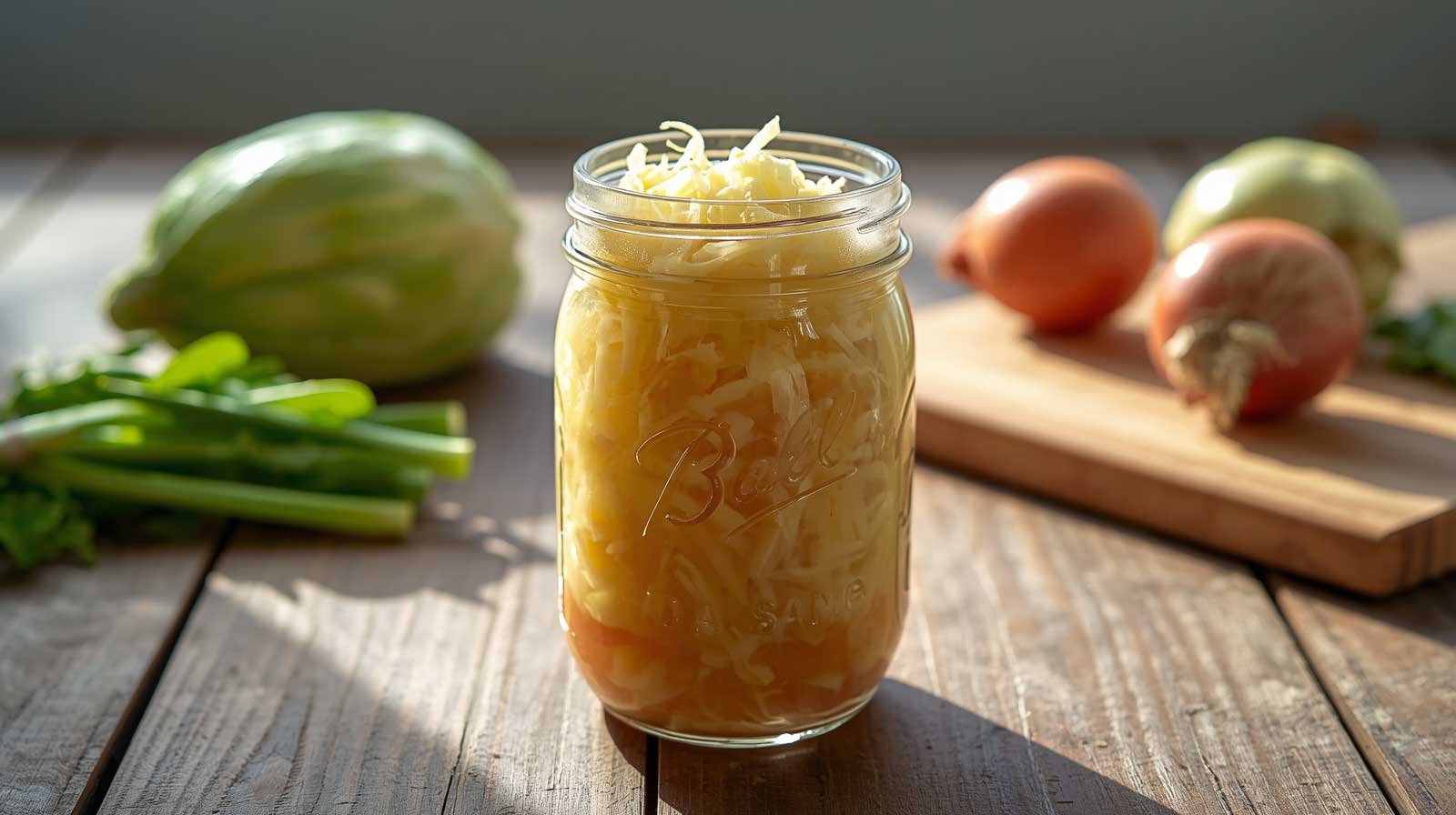
Homemade sauerkraut is one of the easiest fermented foods you can make in your own kitchen. With just two ingredients, fresh cabbage and salt, you can create a tangy, crunchy condiment that adds flavor to sandwiches, salads, grain bowls, and everyday meals.
You don’t need special equipment, expensive fermentation kits, or years of cooking experience. A clean mason jar, a little patience, and a few simple steps are all it takes to get started.
The best part? Once you understand the basics, making sauerkraut becomes a simple kitchen habit. You can prepare a small batch whenever you have fresh cabbage on hand, adjust the fermentation time to suit your taste, and enjoy the satisfaction of making something from scratch.
In this beginner-friendly guide, you’ll learn how to make homemade sauerkraut safely, how much salt to use, how long to ferment it, and how to troubleshoot common problems.
What Is Sauerkraut?
Sauerkraut is finely shredded cabbage that has been fermented with salt. During fermentation, naturally occurring lactic acid bacteria convert sugars in the cabbage into lactic acid. This process gives sauerkraut its characteristic sour flavor and helps preserve it.
Sauerkraut has long been a traditional food in Central and Eastern European cuisines. Today, it’s enjoyed around the world as a topping, side dish, and ingredient in everything from sandwiches to roasted vegetable bowls.
Unlike quick-pickled cabbage, traditional sauerkraut doesn’t need vinegar. The tangy flavor develops naturally through fermentation.
Why You’ll Love This Two-Ingredient Sauerkraut
- Only two ingredients: You need cabbage and non-iodized salt.
- Budget-friendly: A small cabbage can make a generous jar.
- Beginner-friendly: No cooking or complicated equipment is required.
- Easy to customize: Once you’ve mastered the basic method, you can experiment with caraway seeds, garlic, or other flavors.
- Great for meal prep: Keep a jar in the refrigerator and use small portions throughout the week.
Ingredients You’ll Need
This recipe uses just two ingredients. The key is getting the salt-to-cabbage ratio right so the cabbage can ferment in a suitable environment.
1. Fresh Green Cabbage
Choose a firm, fresh head of green cabbage without significant bruising, soft spots, or signs of spoilage. Green cabbage is affordable, easy to shred, and releases plenty of moisture when massaged with salt.
Red cabbage also works if you’d like a colorful variation, but green cabbage is an excellent starting point for beginners.
2. Non-Iodized Salt
Use plain non-iodized salt, such as pickling salt or pure sea salt without additives. Salt helps draw water from the cabbage, creates the brine, and supports the fermentation process.
For this recipe, use approximately 2% salt by weight of the prepared cabbage. For example, 1,000 grams of shredded cabbage needs 20 grams of salt.
Weighing the cabbage and salt is more reliable than measuring by tablespoons because salt crystals vary in size and density.
Equipment You’ll Need
You don’t need a specialized fermentation kit. Gather these basic kitchen items:
- A clean 1-quart mason jar (approximately 950 ml), or another suitable food-safe glass jar
- A kitchen scale
- A sharp knife or mandoline
- A large mixing bowl
- A clean spoon or your hands for mixing
- A fermentation weight or another suitable food-safe way to keep the cabbage submerged
A wide-mouth jar makes packing the cabbage easier. If you don’t have a fermentation weight, a smaller clean glass jar that fits inside the larger jar may help hold the cabbage down, provided it is suitable for food contact and fits safely.
Avoid tightly sealing an actively fermenting jar with an ordinary airtight lid unless it is designed to release fermentation gases. Pressure can build up as the cabbage ferments.
Easy Homemade Sauerkraut in a Mason Jar Recipe
This method relies on the cabbage’s natural moisture to create the brine. The most important steps are measuring the salt, packing the cabbage firmly, and keeping the shredded cabbage submerged throughout fermentation.
Ingredients
- 1 medium head green cabbage, enough to yield approximately 900 to 1,000 grams of shredded cabbage
- 18 to 20 grams non-iodized salt, adjusted to 2% of the cabbage’s weight
Instructions
Step 1: Prepare the Cabbage
Remove any damaged or wilted outer leaves from the cabbage. Rinse the cabbage under clean running water and pat it dry.
Peel off one clean, intact outer leaf and set it aside if you’d like to use it to cover the shredded cabbage later.
Cut the cabbage into quarters, remove the hard core, and slice the remaining cabbage into thin strips. Aim for relatively even slices so the cabbage packs consistently into the jar.
Transfer the shredded cabbage to a large, clean mixing bowl and weigh it.
Step 2: Add the Salt
Calculate 2% of the cabbage’s weight and measure that amount of salt.
For example:
- 500 grams cabbage = 10 grams salt
- 750 grams cabbage = 15 grams salt
- 1,000 grams cabbage = 20 grams salt
Sprinkle the salt evenly over the shredded cabbage.
Use clean hands to toss and massage the cabbage for about 5 to 10 minutes. Squeeze and press it gently as you work. The cabbage will begin to soften and release liquid.
Don’t worry if the brine doesn’t appear immediately. Some cabbage varieties release moisture more slowly than others.
Step 3: Let the Cabbage Rest
Leave the salted cabbage in the bowl for approximately 15 to 30 minutes.
During this time, the salt draws out more moisture, helping create the natural brine needed for fermentation.
After resting, massage the cabbage again briefly. You should see liquid collecting at the bottom of the bowl.
If the cabbage still looks relatively dry, give it a little more time and massage it again.
Step 4: Pack the Mason Jar
Transfer the cabbage into your clean mason jar a handful at a time.
Press each handful down firmly with your fist, a clean spoon, or a suitable tamper. The goal is to remove large air pockets and encourage the brine to rise above the cabbage.
Pour any remaining liquid from the mixing bowl into the jar.
Leave approximately 2 to 5 centimeters of headspace at the top to allow for expansion and bubbling during fermentation.
Step 5: Keep the Cabbage Under the Brine
This is one of the most important steps.
All the shredded cabbage should remain beneath the liquid brine. If necessary, place the reserved cabbage leaf over the shredded cabbage and use a fermentation weight to keep everything submerged.
If the cabbage does not release enough liquid to cover it, wait a little longer and press it again. If it still needs more brine, add a small amount of prepared 2% brine made with 20 grams of non-iodized salt dissolved in 1 liter of water. Add only enough to cover the cabbage.
Do not add plain water, as it can dilute the salt concentration.
Step 6: Cover the Jar
Cover the jar with a fermentation lid designed to release gas, or use a clean lid that is left loose enough to allow gas to escape. If using a regular screw-on lid, check it regularly and release pressure carefully as needed.
Place the jar on a small plate or tray to catch any brine that bubbles over.
Keep it away from direct sunlight in a location with a fairly steady room temperature, ideally around 18 to 22°C (64 to 72°F).
Step 7: Let It Ferment
Allow the cabbage to ferment for approximately 1 to 4 weeks, depending on the temperature and how tangy you like your sauerkraut.
You may notice bubbles, a cloudy brine, or a pleasantly sour smell as fermentation progresses. These can be normal signs of active fermentation.
Check the jar daily, making sure the cabbage remains submerged and the jar is not overflowing. Avoid unnecessary handling, and use clean utensils whenever you need to adjust the cabbage.
Begin tasting after about 7 days using a clean utensil. If the sauerkraut tastes mild, allow it to ferment longer. If it has reached your preferred level of sourness, you can move it to the refrigerator.
Do not taste it if you see signs of spoilage, such as fuzzy mold, unusual colored growth, or a rotten smell.
Step 8: Refrigerate and Enjoy
When the sauerkraut has developed the flavor you like, close the jar and transfer it to the refrigerator.
Refrigeration slows fermentation considerably, although it doesn’t stop it completely. Keep the cabbage submerged in brine and use clean utensils when serving.
For the best quality, enjoy your homemade sauerkraut within a few months and discard it if you notice any signs of spoilage.
How Long Does Homemade Sauerkraut Take to Ferment?
Fermentation time depends on room temperature, the cabbage, the salt concentration, and your personal taste.
| Fermentation time | What to expect |
|---|---|
| 5 to 7 days | Often mild and lightly tangy, but may not be fully fermented |
| 1 to 2 weeks | Increasingly sour flavor and a more developed fermented taste |
| 2 to 4 weeks | Typically more pronounced tanginess and deeper flavor |
These are approximate guidelines, not guaranteed safety milestones. Fermentation can progress at different rates, so don’t rely on the calendar alone.
For a traditional fermented flavor, many people prefer to let sauerkraut ferment for two to three weeks before refrigerating it.
Tips for Making the Best Homemade Sauerkraut
A few small details can make a noticeable difference in the final result.
Use a Kitchen Scale
Measuring salt by weight gives you a consistent 2% ratio. Too little salt can create less favorable fermentation conditions, while too much can slow fermentation and make the cabbage excessively salty.
Keep Everything Submerged
Cabbage exposed to air is more vulnerable to surface mold and spoilage. Use a fermentation weight and check the brine level regularly.
Choose a Suitable Temperature
A stable, moderate room temperature encourages steady fermentation. Excessive heat can lead to softer cabbage and less desirable flavors, while cooler conditions slow the process.
Don’t Add Vinegar
Traditional sauerkraut develops acidity through fermentation. Adding vinegar creates a different product and isn’t necessary for this recipe.
Be Patient
Sauerkraut may not taste very sour during the first few days. Give it time to develop its flavor rather than expecting a finished product overnight.
Keep Your Equipment Clean
Wash your hands, mixing bowl, knife, jar, and utensils before use. Clean equipment helps reduce the risk of unwanted contamination.
Common Sauerkraut Problems and How to Fix Them
Even a simple fermentation project can raise a few questions. Here’s how to approach common problems.
My Cabbage Isn’t Producing Enough Liquid
Some cabbage is naturally drier than others.
Massage the cabbage with salt for a few extra minutes, then let it rest before packing it. If there still isn’t enough liquid to cover it, add a small amount of prepared 2% salt brine.
Never leave the cabbage sitting above the brine for extended periods.
My Sauerkraut Has Bubbles
Small bubbles are common during active fermentation. They form as microorganisms produce gas while fermenting the cabbage’s natural sugars.
Bubbles alone aren’t a reason for concern, but they don’t prove that the batch is safe. Continue checking the cabbage, brine, smell, and appearance.
The Brine Looks Cloudy
Cloudy brine is common during lactic acid fermentation. By itself, it doesn’t mean the sauerkraut has spoiled.
However, discard the batch if there are other concerning signs, such as fuzzy mold, unusual colored growth, or a putrid smell.
My Sauerkraut Is Too Salty
The saltiness may be more noticeable in a young batch or if the salt was measured inaccurately. For the next batch, weigh the cabbage after shredding and calculate the salt carefully.
You can rinse a small serving just before eating if needed, although this will also wash away some of its flavor.
My Sauerkraut Is Soft
Sauerkraut can become soft if the room is too warm, the salt concentration is incorrect, or the cabbage was not fresh.
Use fresh, firm cabbage, maintain the correct salt ratio, and ferment at a moderate temperature. If the texture is accompanied by other signs of spoilage, discard the batch.
I See Mold on the Surface
Visible fuzzy mold is a warning sign. The safest approach is to discard the entire batch rather than skim the mold off and eat the remaining cabbage.
Do not taste questionable sauerkraut to determine whether it is safe.
How to Store Homemade Sauerkraut
Once your sauerkraut reaches the flavor you prefer, transfer it to the refrigerator in a clean, covered jar.
Follow these storage tips:
- Keep the cabbage beneath the brine.
- Use a clean fork or spoon each time you serve it.
- Avoid leaving the jar at room temperature after fermentation is complete.
- Check the sauerkraut before eating and discard it if you notice mold, unusual discoloration, or a rotten odor.
Homemade sauerkraut is not automatically shelf-stable just because it has fermented. For this simple recipe, refrigerated storage is the appropriate choice.
How to Use Homemade Sauerkraut
Sauerkraut is versatile, so you can enjoy it in plenty of ways beyond serving it alongside traditional meals.
- Sandwiches and burgers: Add a spoonful for a tangy, crunchy contrast.
- Salads: Mix a small amount into grain bowls or hearty salads.
- Roasted vegetables: Serve it alongside roasted potatoes, carrots, or cauliflower.
- Eggs and breakfast bowls: Add a little sauerkraut to savory breakfast plates.
- Wraps and tacos: Use it as a bright, acidic topping.
- Grain bowls: Combine it with rice, quinoa, beans, or roasted vegetables.
- Simple side dish: Serve a small portion with lentils, sausages, or other savory mains.
If you want to preserve the live microorganisms in traditionally fermented sauerkraut, add it after cooking rather than heating it for a long time. Heat can reduce the number of live cultures.
Is Homemade Sauerkraut Healthy?
Sauerkraut is a low-calorie food that provides fiber and some vitamin C, along with other nutrients from cabbage. Fermentation changes the cabbage’s flavor and can alter the availability of certain nutrients.
Traditionally fermented sauerkraut may contain live microorganisms, although the types and amounts vary by batch. Not every fermented product qualifies as a probiotic food with demonstrated health benefits.
One thing to remember is that sauerkraut can be high in sodium because salt is essential to the fermentation process. If you need to limit sodium, pay attention to portion sizes and any guidance from your healthcare professional.
Final Thoughts
Making easy homemade sauerkraut in a mason jar is a simple way to bring traditional fermentation into your kitchen. With just fresh cabbage and salt, you can create a crunchy, tangy condiment that adds a burst of flavor to everyday meals.
The secret is to use the right amount of salt, keep the cabbage fully submerged, maintain a moderate temperature, and give the fermentation process enough time. Start with a small batch, pay attention to how the flavor develops, and adjust the fermentation time to suit your preferences.
Once you get comfortable with the basic method, homemade sauerkraut can become an easy, budget-friendly addition to your regular kitchen routine.
Easy Homemade Sauerkraut in a Mason Jar (Just Two Ingredients)

Ingredients
2 itemsInstructions
12 steps-
01
Remove damaged outer leaves, rinse the cabbage, and pat dry.
-
02
Remove the core and shred the cabbage into thin strips.
-
03
Weigh the shredded cabbage and calculate 2% of its weight in salt.
-
04
Massage the salt into the cabbage for 5 to 10 minutes until it begins releasing liquid.
-
05
Let the cabbage rest for 15 to 30 minutes, then massage again.
-
06
Pack the cabbage firmly into a clean mason jar, pouring in all the released liquid.
-
07
Leave some headspace and use a fermentation weight to keep the cabbage beneath the brine.
-
08
If needed, add a small amount of prepared 2% salt brine to cover the cabbage.
-
09
Cover with a suitable fermentation lid or a cover that allows gas to escape.
-
10
Leave the jar at approximately 18 to 22°C (64 to 72°F), away from direct sunlight, and check it daily.
-
11
Begin assessing the flavor after about a week. Allow more time if you prefer a tangier taste.
-
12
Once it reaches your preferred flavor, refrigerate it and keep the cabbage submerged in brine.
Chef's Notes & Tips
- Weighing the cabbage and salt is more reliable than using volume measurements.
- Keep all cabbage beneath the brine throughout fermentation.
- Do not taste the batch if you see fuzzy mold, unusual colored growth, or notice a rotten smell.
- Store the finished sauerkraut in the refrigerator, not at room temperature.
- For a batch made with 750 grams of cabbage, use 15 grams of salt.