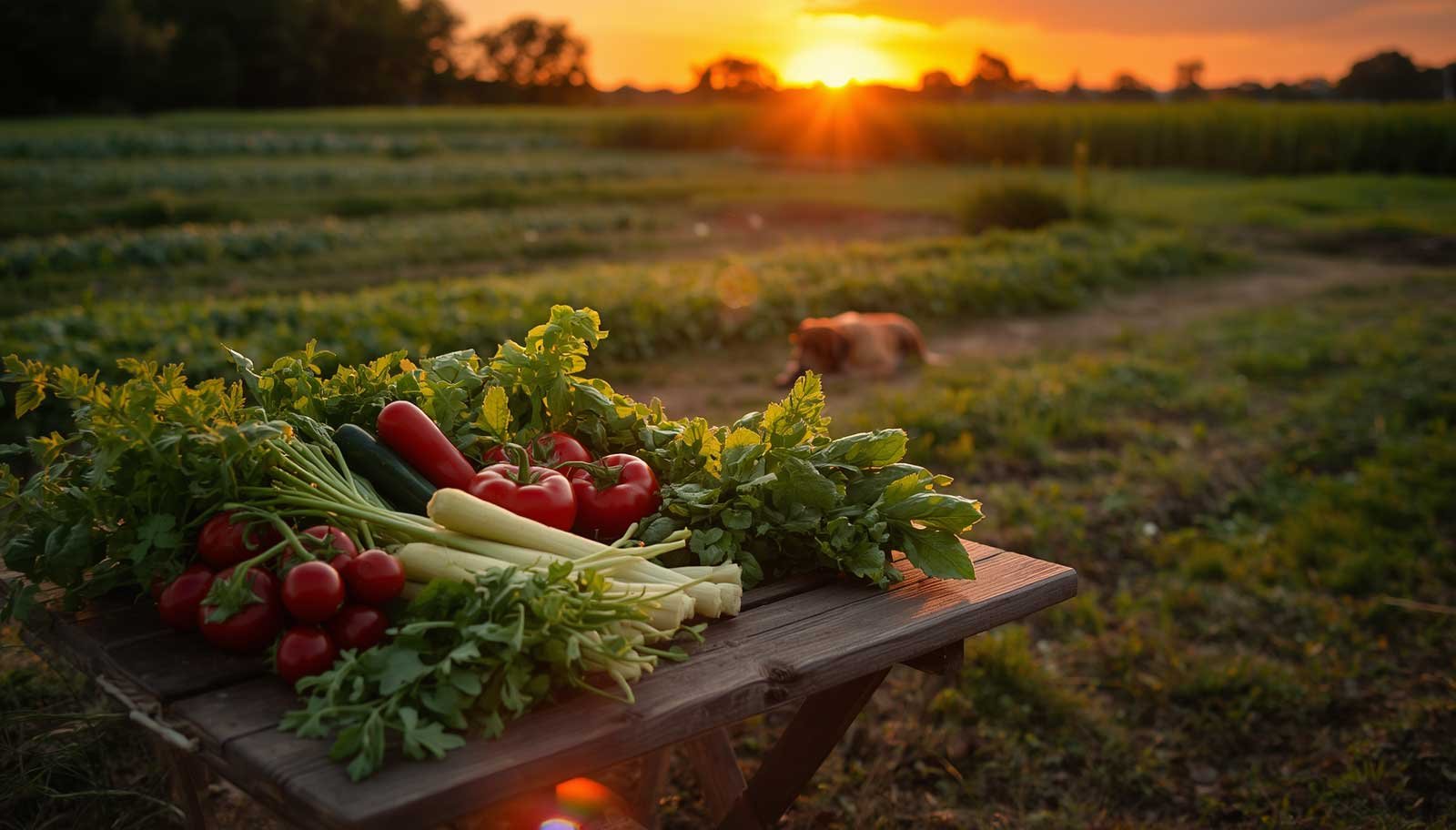
There is something special about cooking dinner with ingredients you picked yourself. The vegetables are still fresh from the garden, the herbs smell amazing, and even a simple meal feels a little more satisfying. On a small farm, dinner often starts long before anyone turns on the stove.
I love the idea of building a meal around whatever is ready to harvest. Maybe there are a few ripe tomatoes, tender zucchini, fresh green beans, and a handful of herbs growing near the kitchen. Add some potatoes from the pantry and a little chicken, and you have the makings of a wonderful home-cooked dinner.
This is the kind of meal that does not need a complicated plan or a long shopping list. It is about using what you have, keeping the cooking simple, and letting fresh ingredients do most of the work.
For this farm-style dinner, we are making a rustic skillet chicken with garden vegetables, garlic, and fresh herbs. Everything comes together in one pan, making it a lovely meal for a busy day outdoors.
A Morning in the Garden
The best part of a farm day is often the early morning, before the sun gets too hot. The garden is quiet, the air feels fresh, and there is usually something ready to pick.
I start by checking the tomato plants. A few ripe tomatoes come away easily from the vines, their skins warm and fragrant. Next, I pick some zucchini, a handful of green beans, and a few sprigs of parsley and thyme.
The potatoes are already stored in the kitchen, so there is no need to dig up anything new. A couple of onions and some garlic from the pantry will round everything out.
You do not need a large farm to enjoy this kind of cooking. A small backyard garden, a few containers on a patio, or even fresh vegetables from a local farmers market can give you the same inspiration.
The trick is to look at what is fresh and build your meal around it.
What We Picked for Dinner
For this meal, the garden gives us ripe tomatoes, zucchini, green beans, and fresh herbs. These vegetables cook beautifully together and make a colorful, satisfying skillet dinner.
Tomatoes soften into a light sauce as they cook, coating the chicken and vegetables with their juices. Zucchini becomes tender without losing all its texture, while green beans add a little crunch.
Fresh parsley and thyme bring everything together. A squeeze of lemon at the end brightens the flavors and makes the whole dish taste fresh.
Chicken adds protein and makes the meal filling, while potatoes on the side turn it into a proper family dinner.
If your garden has different vegetables ready, feel free to change things around. Bell peppers, eggplant, spinach, or fresh peas can all work well in this kind of rustic cooking.
The Simple Ingredients That Make It Special
One of the nicest things about farm cooking is that you do not need a cupboard full of special ingredients.
Fresh vegetables provide most of the flavor, while olive oil, garlic, salt, and pepper help bring everything together. Fresh herbs add fragrance without needing a heavy sauce.
The chicken can be boneless thighs or breasts, depending on what you prefer. I like chicken thighs for this recipe because they stay juicy and work particularly well with the tomato juices.
You can also leave out the chicken and use chickpeas or white beans for a simple vegetarian version.
Cooking Dinner Straight from the Harvest
Step 1: Prepare the Vegetables
Wash the tomatoes, zucchini, and green beans well. Cut the tomatoes into chunks, slice the zucchini into half-moons, and trim the ends of the green beans.
Chop the onion and mince the garlic. Pick the parsley leaves from their stems and chop them roughly.
It helps to prepare everything before you start cooking. Once the pan is hot, the recipe moves along quickly.
Step 2: Brown the Chicken
Heat olive oil in a large skillet over medium-high heat. Season the chicken with salt, black pepper, and a little dried oregano.
Add the chicken to the hot pan and cook until golden on both sides. It does not need to be completely cooked through at this stage because it will finish cooking with the vegetables.
Transfer the chicken to a plate while you prepare the vegetables.
Step 3: Cook the Onion and Garlic
Add the chopped onion to the same skillet. Cook for a few minutes until it softens, stirring occasionally.
Add the garlic and thyme, then cook for another 30 seconds. The garlic should smell fragrant but should not turn brown.
Use a wooden spoon to scrape up the flavorful browned bits from the bottom of the pan.
Step 4: Add the Garden Vegetables
Add the green beans and zucchini to the skillet. Stir them around in the onion and garlic mixture for a few minutes.
Next, add the chopped tomatoes. They will begin releasing their juices as they heat, creating a simple sauce without the need for canned tomatoes or stock.
Season lightly with salt and pepper. If the tomatoes are especially juicy, you may not need to add any extra liquid.
Step 5: Return the Chicken to the Pan
Place the chicken back into the skillet, nestling it among the vegetables. Lower the heat to medium-low and cover the pan.
Cook until the chicken reaches an internal temperature of 165°F (74°C) at its thickest point. The vegetables should be tender, and the tomatoes should have softened into a light sauce.
If the pan becomes too dry before the chicken is cooked, add a small splash of water or chicken broth.
Step 6: Finish with Fresh Herbs
Remove the lid and stir the vegetables gently around the chicken.
Add the chopped parsley and a squeeze of fresh lemon juice. Taste the sauce and adjust the salt and pepper if needed.
The finished dish should be colorful and full of fresh flavor, with tender chicken and vegetables coated in the tomato and herb juices.
What to Serve with Farm-Fresh Chicken
A dinner like this is delicious with roasted potatoes, especially if you have some stored from an earlier harvest. Cut them into small pieces, toss with olive oil, salt, and thyme, and roast until golden.
Crusty bread is another good option. It is perfect for soaking up the tomato juices at the bottom of the skillet.
If you want something lighter, serve the chicken with a simple green salad dressed with lemon juice and olive oil.
For a vegetarian farm dinner, replace the chicken with a can of drained chickpeas or cooked white beans. Stir them into the vegetables near the end and heat until warmed through.
Making the Most of What You Grow
Cooking from the garden does not mean every ingredient has to be homegrown. It simply means starting with what is fresh and making the most of it.
If you have extra zucchini, slice it and freeze it for soups or cooked dishes. Ripe tomatoes can be chopped and frozen for future sauces. Fresh herbs can be chopped and frozen in small portions with a little water or olive oil.
Green beans are best enjoyed soon after picking, but they can also be blanched and frozen if your garden produces more than you can eat.
When you plan meals around what is ready to harvest, you may find that you waste less food and spend less time deciding what to cook.
It also gives you a reason to try vegetables in different ways. A basket of tomatoes might become a skillet sauce one day, a fresh salad the next, and a simple soup later in the week.
A Few Tips for Better Farm-Style Cooking
Use vegetables at their freshest. Freshly harvested produce often needs very little extra seasoning. Let the natural flavors shine.
Do not cook every vegetable for the same amount of time. Add firmer vegetables first and delicate ingredients later so everything finishes at the right texture.
Keep the seasoning simple. Garlic, fresh herbs, olive oil, lemon, salt, and pepper are enough to make a delicious meal.
Taste as you cook. Garden vegetables vary in sweetness and water content. Adjust the seasoning based on what you are working with.
Make extra when you can. Leftover chicken and vegetables are lovely tucked into wraps, spooned over rice, or served with eggs the next day.
Turning Leftovers into Tomorrow’s Lunch
If there is anything left after dinner, let it cool and refrigerate it in a covered container within two hours.
The next day, warm the chicken and vegetables in a skillet over medium-low heat until heated through. Add a splash of water if the sauce has thickened.
You can also shred the leftover chicken and mix it with the vegetables for a quick sandwich filling. Spoon it over rice or pasta for another easy meal.
Cooked leftovers should generally be used within three to four days when stored in a refrigerator at 40°F (4°C) or below.
A Little More Than Just Dinner
A meal made from what you picked that morning feels different from one made entirely from ingredients bought at the store. There is a connection between the garden and the table that makes even an ordinary Tuesday dinner feel memorable.
It might be the smell of fresh thyme in the pan, the sweetness of a tomato that ripened on the vine, or the simple pleasure of eating something you helped grow.
You do not need a perfect garden or a farmhouse kitchen to enjoy that feeling. Start with one vegetable you love, learn when it is in season, and find a few easy recipes that help you use it well.
Sometimes the best dinners come from looking at the day’s harvest, heating a skillet, and seeing what you can make.
Rustic Farmhouse Skillet Chicken with Garden Vegetables
Ingredients
14 itemsInstructions
11 steps-
01
Wash and prepare the vegetables. Chop the onion and tomatoes, slice the zucchini, trim the green beans, and mince the garlic.
-
02
Heat the olive oil in a large skillet over medium-high heat. Season the chicken with salt, black pepper, and oregano.
-
03
Add the chicken to the skillet and brown for about 3 to 4 minutes per side. Transfer to a plate.
-
04
Add the chopped onion to the same skillet and cook for 3 minutes until softened.
-
05
Stir in the garlic and thyme. Cook for about 30 seconds until fragrant.
-
06
Add the green beans and zucchini. Cook for 3 to 4 minutes, stirring occasionally.
-
07
Add the chopped tomatoes and stir well. Season with a little additional salt and pepper if needed.
-
08
Return the chicken to the skillet and nestle it among the vegetables. Cover and cook over medium-low heat for 12 to 20 minutes, depending on the size and thickness of the chicken.
-
09
Check that the chicken reaches an internal temperature of 165°F (74°C). If the pan becomes too dry during cooking, add a splash of water or chicken broth.
-
10
Stir in the fresh parsley and lemon juice. Taste and adjust the seasoning.
-
11
Serve warm with roasted potatoes, crusty bread, rice, or a fresh green salad.
Chef's Notes & Tips
- Use any combination of seasonal vegetables you have available, adjusting cooking times as needed.
- Chicken thighs are especially juicy, while chicken breasts work well when they are evenly sized.
- For a vegetarian version, replace the chicken with cooked chickpeas or white beans.
- Store leftovers in an airtight container in the refrigerator for 3 to 4 days.
- Freshly picked tomatoes may release plenty of juice, so add extra liquid only if needed.