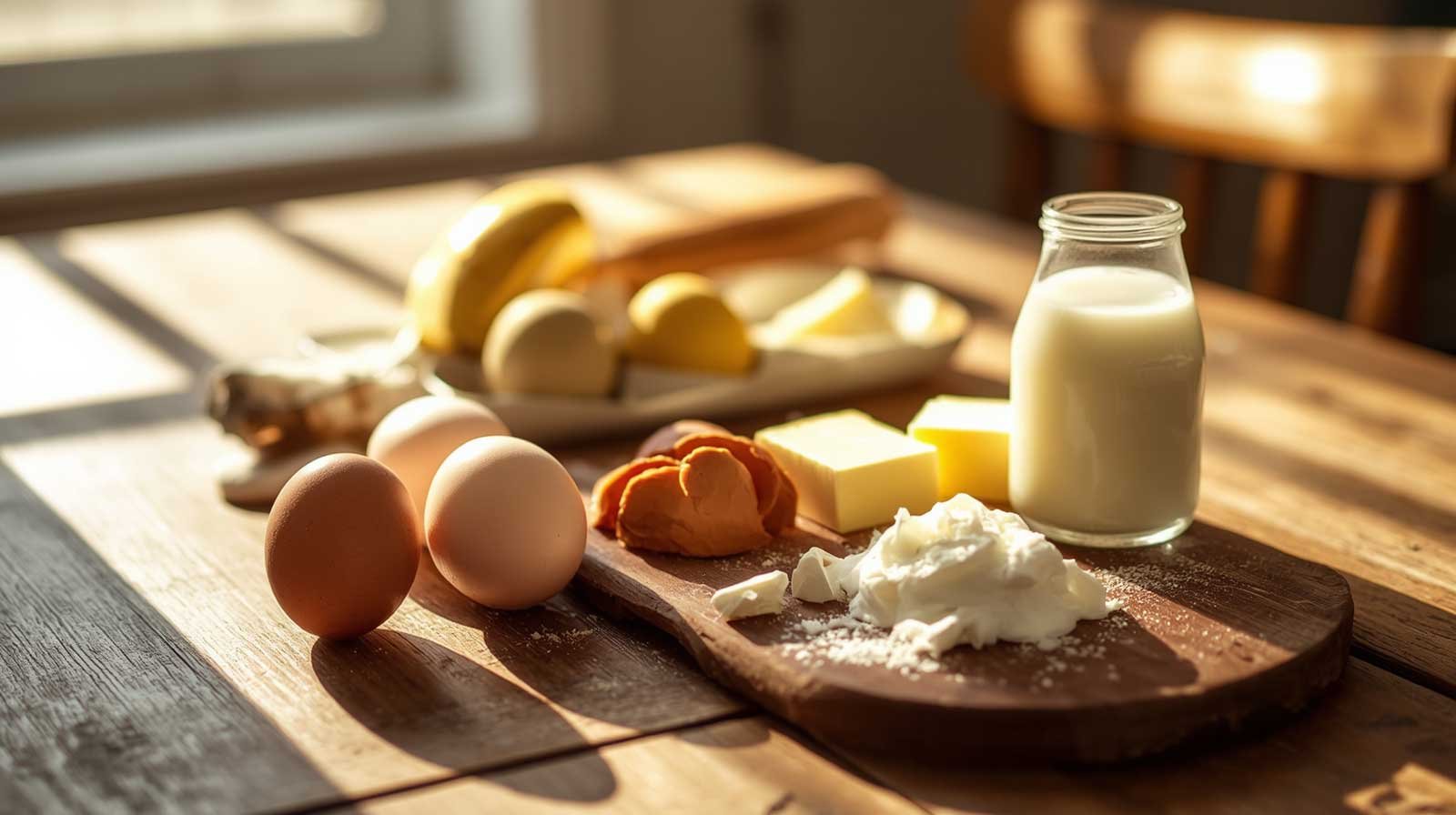
We’ve all been there. You’re halfway through a cake recipe when you realize you’re out of eggs, or you’ve already mixed the dry ingredients for muffins and discovered there’s no buttermilk in the fridge. Before you run to the store or abandon your baking plans, take a look at what you already have in your kitchen.
Many baking ingredients have practical substitutes that can save a recipe. Milk mixed with lemon juice can stand in for buttermilk, mashed banana can replace eggs in some baked goods, and oil can sometimes take the place of melted butter.
The important thing is knowing which substitutions work well and which ones can change the texture, flavor, or structure of your baked goods.
This guide covers 15 common baking substitutions, including simple measurements, the best uses for each option, and tips to help you avoid disappointing results. Whether you’re making cookies, cakes, muffins, brownies, or quick breads, you’ll have a few reliable alternatives ready when you need them.
1. Buttermilk Substitute
Buttermilk adds moisture, tenderness, and a gentle tang to pancakes, biscuits, muffins, and cakes. Its acidity also reacts with baking soda, helping certain batters rise.
Fortunately, you can make a simple substitute with regular milk and an acidic ingredient.
Best substitute: Milk and lemon juice or white vinegar.
How to make it:
- Measure 1 tablespoon of lemon juice or white vinegar into a measuring cup.
- Add enough milk to make 1 cup.
- Stir and let it stand for 5 to 10 minutes before using.
The milk may look slightly curdled, which is normal.
Best for: Pancakes, muffins, quick breads, biscuits, and many cakes.
Another option: Plain yogurt thinned with a little milk can work well. Use approximately 3/4 cup plain yogurt plus enough milk to make 1 cup, adjusting until it has a pourable consistency.
Baking tip: The milk-and-acid mixture is a practical substitute in many recipes, but it isn’t identical to cultured buttermilk. In recipes where buttermilk plays a major role in flavor or texture, results may vary.
2. Egg Substitute
Eggs help bind ingredients, add moisture, provide structure, and contribute to leavening. The best substitute depends on what you’re baking.
For cookies and muffins, you have several useful options. For recipes that rely heavily on whipped eggs, such as sponge cakes or soufflés, substitutes are much harder to use successfully.
Best substitutes:
| Substitute | Amount for 1 egg | Best uses |
|---|---|---|
| Ground flaxseed and water | 1 tbsp ground flaxseed + 3 tbsp water | Cookies, muffins, quick breads |
| Mashed banana | 1/4 cup mashed banana | Muffins, banana bread, soft cakes |
| Unsweetened applesauce | 1/4 cup | Muffins, brownies, quick breads |
| Plain yogurt | 1/4 cup | Cakes, muffins, quick breads |
For a flax egg, mix the ground flaxseed with water and let it stand for about 5 to 10 minutes until thickened.
Baking tip: Banana and applesauce add moisture but don’t reproduce every function of an egg. Banana also adds a noticeable flavor, while applesauce can make baked goods softer and more cake-like. Start with recipes that call for only one or two eggs rather than recipes that depend on several eggs for structure.
3. Butter Substitute
Butter contributes richness, flavor, tenderness, and structure. It also contains water and milk solids, so replacing it with another fat can change how cookies spread and how cakes feel.
Best substitutes: Neutral vegetable oil or a baking-friendly plant-based butter.
For every 1 cup (227 g) of butter, you can use approximately:
- 3/4 cup (180 ml) neutral oil in many cakes and quick breads.
- 1 cup plant-based butter as a direct replacement in many recipes, depending on the product.
Oil works particularly well in moist cakes, muffins, and quick breads. Plant-based butter is often a better option when you want to preserve the familiar texture of cookies or frosting.
Best for: Cakes, muffins, brownies, and some cookies.
Baking tip: Oil is entirely fat, while butter contains some water. A direct one-to-one swap with oil may make certain recipes greasy or change their spread. For shortbread, laminated pastry, and recipes that depend on creaming butter with sugar, use a suitable butter alternative whenever possible.
4. Milk Substitute
Milk adds moisture, helps dissolve ingredients, and contributes protein, sugar, and fat. If you’re out of dairy milk, several alternatives can work.
Best substitutes: Unsweetened soy milk, oat milk, or almond milk.
Use the same volume of plant-based milk as the dairy milk called for in the recipe.
Best for: Pancakes, muffins, cakes, quick breads, and many bread doughs.
Baking tip: Unsweetened, unflavored plant-based milk is usually the most versatile choice. Soy milk often behaves more similarly to dairy milk because of its protein content, while almond milk may produce a slightly lighter result. Sweetened or flavored varieties can alter the taste and sweetness of the final bake.
5. Heavy Cream Substitute
Heavy cream adds fat and richness to ganache, creamy fillings, sauces, and some baked desserts. A substitute may work in one application but not another.
Best substitute for some cooked recipes: Milk mixed with melted butter.
For approximately 1 cup of heavy cream, combine:
- 3/4 cup whole milk
- 1/4 cup melted butter
Stir thoroughly before using.
Best for: Some sauces, soups, and cooked fillings where cream provides richness.
Important limitation: This mixture does not whip like heavy cream. It is not a reliable replacement for whipped cream toppings, whipped ganache, or recipes that depend on cream’s ability to hold air.
For those uses, choose a suitable whipping cream alternative designed for the job.
6. Sour Cream Substitute
Sour cream adds moisture, richness, and acidity to cakes, muffins, coffee cakes, and quick breads. It helps create a tender crumb and a slightly tangy flavor.
Best substitute: Plain full-fat yogurt.
Use approximately the same amount of plain yogurt as sour cream. Greek yogurt works especially well because its thicker texture is similar to sour cream.
Best for: Coffee cake, muffins, pound cake, quick breads, and some frostings.
Baking tip: If you’re using low-fat yogurt, the finished bake may be slightly less rich. Avoid strongly flavored or sweetened yogurt unless its flavor suits the recipe.
7. Cream Cheese Substitute
Cream cheese is commonly used in cheesecakes, frostings, pastries, and creamy fillings. Because it provides a distinctive combination of tang, fat, and thickness, it isn’t always easy to replace.
Best substitute for some frostings and fillings: Thick, strained full-fat yogurt or a suitable plant-based cream cheese.
Use the same amount as a starting point, then assess the texture.
Best for: Some frostings, spreads, and soft fillings.
Baking tip: Strained yogurt has more moisture and a tangier flavor than cream cheese. It usually won’t provide the same rich, firm texture in a traditional cheesecake. For cheesecake, a purpose-made cream cheese alternative is generally a better choice.
8. Baking Powder Substitute
Baking powder releases gas when it reacts with moisture and heat, helping cakes, muffins, and biscuits rise. If you’ve run out, you may be able to make a substitute using baking soda and cream of tartar.
Homemade substitute:
For 1 teaspoon baking powder, mix:
- 1/4 teaspoon baking soda
- 1/2 teaspoon cream of tartar
Use the mixture immediately after combining it with the other ingredients.
Best for: Cakes, muffins, pancakes, and quick breads.
Baking tip: Baking soda needs acid to produce carbon dioxide. If you don’t have cream of tartar, another substitution may be possible depending on the acids already present in the recipe, but simply replacing baking powder with baking soda is not a reliable solution.
9. Baking Soda Substitute
Baking soda is an alkaline leavening ingredient. It needs an acid in the recipe to produce carbon dioxide, which helps baked goods rise.
Best substitute: Baking powder, with adjustments.
You generally need around three times as much baking powder as baking soda by volume, but this is only a rough starting point.
For example, 1/4 teaspoon baking soda may be replaced by approximately 3/4 teaspoon baking powder in some recipes.
Best for: Certain cakes, muffins, and quick breads.
Baking tip: This substitution increases the amount of baking powder and may alter the flavor, browning, and texture. It works best when the recipe doesn’t depend heavily on baking soda for neutralizing acidic ingredients. For recipes such as classic chewy cookies, results can be noticeably different.
10. All-Purpose Flour Substitute
All-purpose flour provides the structure of many baked goods. Different flours absorb water differently and contain different amounts of protein, so the right replacement depends on the recipe.
Best substitute for some cakes: Cake flour.
To make a simple cake-flour-style substitute for 1 cup of all-purpose flour:
- Measure 1 cup all-purpose flour.
- Remove 2 tablespoons.
- Replace those 2 tablespoons with 2 tablespoons cornstarch.
- Sift thoroughly before using.
This produces a lower-protein mixture that can give some cakes a more tender texture.
Best for: Certain layer cakes and delicate baked goods.
Baking tip: This is a home workaround, not a perfect replacement for commercial cake flour. It is also not suitable for every recipe. Bread flour, whole wheat flour, and gluten-free flour blends behave differently, so they should not be substituted cup for cup without considering the recipe.
11. Granulated Sugar Substitute
Sugar does more than sweeten baked goods. It affects moisture retention, browning, spread, tenderness, and the way butter creams in a batter.
Best substitute: A similar granulated sweetener, when appropriate for the recipe.
Depending on the product, white granulated sugar can sometimes be replaced with an equal amount of another granulated sugar. However, flavor, moisture, and browning may change.
Brown sugar is another option in some cookies and cakes. It contains molasses, which contributes moisture and a deeper flavor.
Best for: Many cookies, muffins, quick breads, and cakes.
Baking tip: Liquid sweeteners such as honey and maple syrup are more complicated substitutions. They add moisture and may cause faster browning, so the liquid and baking time may need adjustment. Sugar-free sweeteners also vary widely in their baking performance.
12. Brown Sugar Substitute
Brown sugar gives cookies and cakes a moist texture and a caramel-like flavor. If you’ve run out, white sugar mixed with molasses is a useful homemade alternative.
Homemade substitute:
For approximately 1 cup brown sugar, combine:
- 1 cup white granulated sugar
- 1 tablespoon molasses for light brown sugar
- Up to 2 tablespoons molasses for a darker flavor
Mix until the molasses is evenly distributed.
Best for: Cookies, gingerbread, muffins, and quick breads.
Baking tip: If you don’t have molasses, white sugar can work in some recipes, but the result may be less moist and less flavorful. Cookies may also spread or brown differently.
13. Vegetable Oil Substitute
Vegetable oil provides moisture and tenderness without adding the distinct flavor of butter. If you’re short on oil, other neutral oils can often do the job.
Best substitutes: Canola oil, sunflower oil, or another neutral cooking oil.
Use the same amount as the vegetable oil listed in the recipe.
Best for: Cakes, muffins, brownies, and quick breads.
Baking tip: Olive oil can also work in many cakes, but its flavor may be noticeable, especially in delicate vanilla or white cakes. Strongly flavored oils are better suited to recipes where their taste complements the other ingredients.
If you want to reduce fat rather than replace one oil with another, applesauce can replace part of the oil in certain moist cakes and muffins, but the result will generally be less rich.
14. Lemon Juice Substitute
Lemon juice adds acidity and bright flavor to cakes, muffins, glazes, and fillings. It can also activate baking soda in recipes that rely on an acidic ingredient.
Best substitute: White vinegar when acidity is the main purpose.
Use a similar amount of white vinegar in recipes where its flavor won’t be noticeable. For example, a small quantity may work in a cake batter that needs an acid to react with baking soda.
Best for: Some cake batters and recipes where acidity matters more than lemon flavor.
Baking tip: Vinegar won’t recreate the fresh citrus taste of lemon juice. If the recipe depends on lemon flavor, lemon zest or another citrus juice may be a better choice. Be especially careful with lemon curd, citrus fillings, and recipes where the juice contributes significant flavor and liquid.
15. Vanilla Extract Substitute
Vanilla extract adds warmth and aroma to cookies, cakes, muffins, custards, and frosting. Although it is a small ingredient, its flavor can make a noticeable difference.
Best substitutes: Vanilla bean paste, vanilla powder, or another suitable vanilla flavoring.
Use the product’s recommended conversion because concentration varies.
If you don’t have vanilla, you can sometimes omit it from a strongly flavored recipe without causing major structural problems. In a simple sugar cookie or vanilla cake, however, the missing flavor will be more noticeable.
Best for: Cookies, cakes, brownies, muffins, and frostings.
Baking tip: Almond extract can add a pleasant flavor to some recipes, but it is not a direct flavor match for vanilla. It is also much stronger, so use it sparingly.
Quick Baking Substitution Chart
Keep this chart handy when you need to make a quick decision in the kitchen.
| Ingredient needed | Substitute | Starting amount |
|---|---|---|
| 1 cup buttermilk | Milk + lemon juice or vinegar | 1 tbsp acid + milk to 1 cup |
| 1 egg | Flaxseed + water | 1 tbsp ground flaxseed + 3 tbsp water |
| 1 egg | Mashed banana | 1/4 cup |
| 1 egg | Unsweetened applesauce | 1/4 cup |
| 1 cup butter | Neutral oil | About 3/4 cup in many cakes |
| 1 cup milk | Unsweetened plant milk | 1 cup |
| 1 cup sour cream | Plain yogurt | About 1 cup |
| 1 tsp baking powder | Baking soda + cream of tartar | 1/4 tsp + 1/2 tsp |
| 1/4 tsp baking soda | Baking powder | About 3/4 tsp, recipe dependent |
| 1 cup all-purpose flour | Cake-flour-style mixture | 1 cup flour minus 2 tbsp, plus 2 tbsp cornstarch |
| 1 cup brown sugar | White sugar + molasses | 1 cup sugar + 1 to 2 tbsp molasses |
| 1 cup vegetable oil | Canola or sunflower oil | 1 cup |
| Lemon juice | White vinegar | Similar amount when acidity is the goal |
| Vanilla extract | Vanilla bean paste or powder | Follow product conversion |
These amounts are useful starting points, not universal guarantees. Baking is sensitive to ingredient ratios, so substitutions work best when you understand the role each ingredient plays in the recipe.
Baking Substitutions That Don’t Always Work
Some ingredients are easier to replace than others. A quick substitution can save muffins or a simple cake, but it may not work in every type of baking.
Don’t Replace Every Egg the Same Way
Flax eggs are useful for binding, while banana and applesauce add moisture. None of these alternatives behaves exactly like eggs in a recipe that relies on whipped eggs for volume.
Don’t Swap Butter and Oil Blindly
Butter contains water and milk solids, while oil is almost entirely fat. Replacing butter with oil can change how cookies spread and how pastry holds its shape.
Don’t Confuse Baking Soda with Baking Powder
Both are leavening agents, but they aren’t interchangeable in equal amounts. Baking soda needs an acidic ingredient, while baking powder includes an acid component.
Don’t Substitute Flour Without Considering Structure
A gluten-free flour blend, whole wheat flour, cake flour, and bread flour all behave differently. The right choice depends on whether you’re making a tender cake, chewy cookie, or chewy loaf of bread.
Tips for Successful Baking Substitutions
Before changing ingredients, take a moment to think about what the missing ingredient does in the recipe.
- Check the ingredient’s purpose. Is it adding moisture, structure, fat, acidity, or flavor?
- Start with small changes. If you’re experimenting, make one substitution at a time so you can learn what works.
- Measure accurately. Baking ratios matter, especially for flour, salt, and leavening agents.
- Expect texture changes. A substitute can make cookies softer, cakes denser, or muffins more moist.
- Use a tested recipe when possible. Recipes designed specifically for egg-free, dairy-free, or gluten-free baking are often more reliable than improvised swaps.
- Write down your results. Record what you changed and how the baked goods turned out so you can repeat successful adjustments.
Summary
Running out of a baking ingredient doesn’t always mean you have to stop what you’re doing. With a few reliable substitutions, you can often finish your recipe using ingredients already in your kitchen.
Milk and lemon juice can stand in for buttermilk, ground flaxseed can help bind egg-free muffins, and neutral oil can replace butter in many moist cakes. The key is to match the substitute to the job the original ingredient performs.
Keep the quick substitution chart somewhere handy, and remember that baking is a balance of moisture, fat, structure, and flavor. When you’re unsure, choose a recipe-tested alternative rather than making several changes at once.
With a little practice, you’ll become more confident handling those unexpected moments when the recipe calls for something you don’t have.