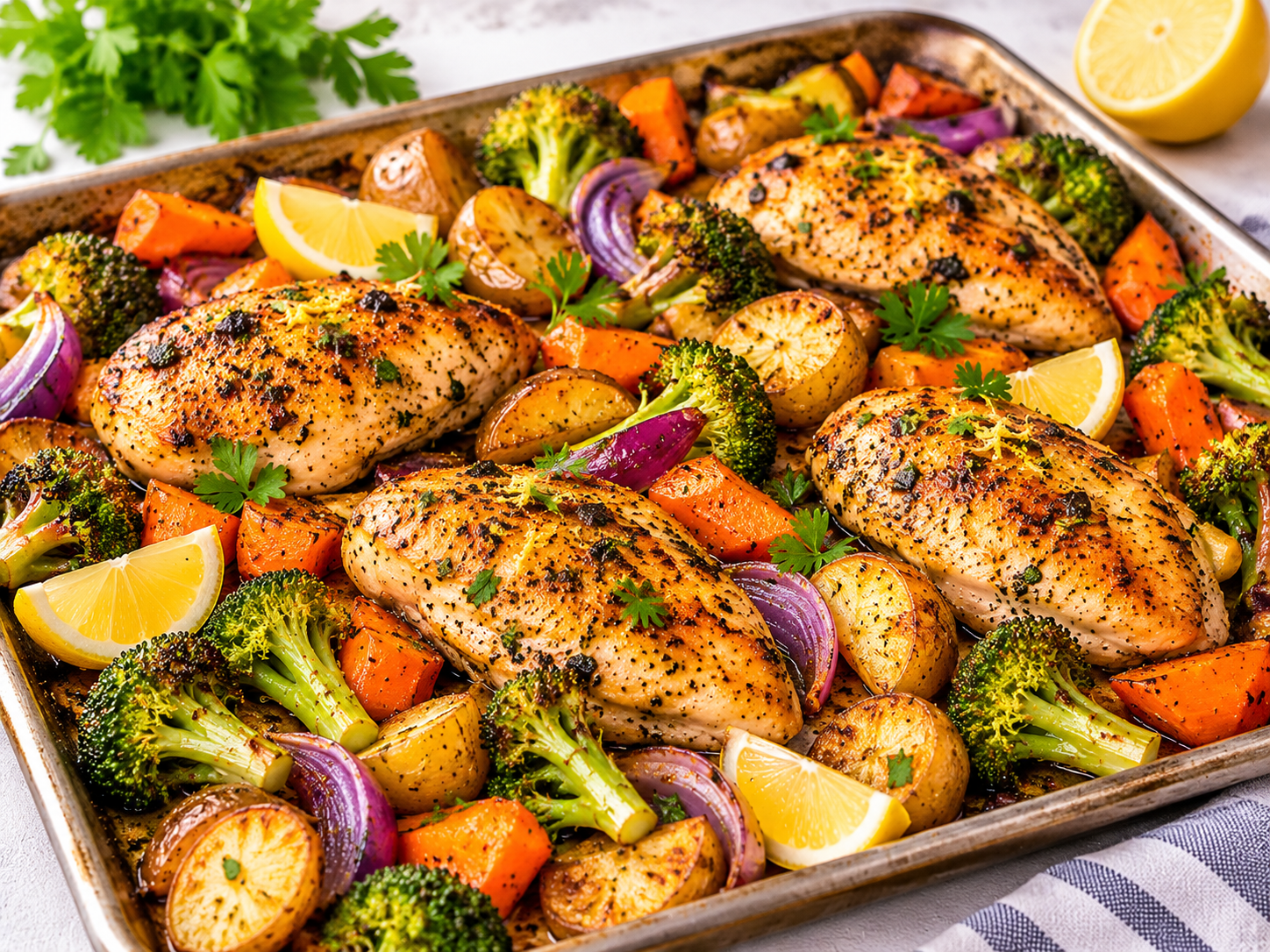
A good meal-prep lunch should be easy to assemble, hold up in the fridge, and still taste good after reheating. These lemon pepper chicken bowls tick those boxes. The chicken is bright with lemon and black pepper, the rice makes the meal filling, and roasted vegetables add colour and a little sweetness.
Cook the rice while the chicken and vegetables roast, then let the hot ingredients cool before dividing them between containers. Keep cucumber, tomatoes, and any leafy greens separate. Add those fresh ingredients after reheating and the bowls will have a much nicer mix of textures.
Use brown rice for a nutty flavour or white rice if you prefer something softer. You can also swap in quinoa or couscous. The chicken is seasoned simply, so a spoonful of yoghurt dressing or an extra squeeze of lemon is an easy way to change things up through the week.
Why You’ll Love This Lemon Pepper Chicken Meal-Prep Bowls
- Easy to get started: The main seasoning uses lemon zest, lemon juice, black pepper, garlic, olive oil, and parsley, pantry staples, and a little oil. There is no need for a long ingredient list or specialist equipment, so the recipe is approachable even on a busy weekday.
- Make it with the chicken you have: You can use chicken breasts or thighs. Breasts are lean and cook quickly, while thighs are more forgiving and tend to remain juicy if the cooking time runs a little longer.
- Dinner is all in one: The combination of brown rice, cucumber, cherry tomatoes, and steamed broccoli makes the dish feel complete. You can swap vegetables according to the season or what is available at your local supermarket.
- Make it your own: Adjust the pepper, garlic, herbs, and lemon to suit your preferences. Serve sauces or extra seasoning at the table so everyone can finish their portion as they like.
- Good for tomorrow’s lunch: The cooked chicken can be sliced into wraps, added to salads, or served with grains the next day. It also packs well for lunch the next day.
Serve warm, with the cooking juices spooned over the chicken so that each portion gets the full flavour of the seasoning.
Tips for the Best Lemon Pepper Chicken
Choose chicken pieces that are similar in thickness. If one breast is much thicker than another, gently flatten the thick end between sheets of baking paper so it cooks more evenly. This reduces the chance of a dry outside and an undercooked centre.
Pat the chicken dry before seasoning. Surface moisture can dilute the seasoning and interfere with browning. Use paper towels, then season the chicken just before cooking or refrigerate it covered if preparing it a few hours ahead.
Use the lemon pepper seasoning evenly. Rub it over both sides of the chicken and into any folds. If the recipe includes lemon juice, do not leave the chicken sitting in a very acidic marinade for an extended period; a short seasoning time is enough for this style of recipe.
Give everything a little breathing room in the pan. Food needs room for hot air or heat to circulate. If using a baking sheet, spread ingredients in one layer. If using a skillet, brown the chicken in batches rather than letting the pieces steam.
The most reliable way to check the chicken is with a thermometer, not by judging its colour. Check the thickest part of the chicken and cook poultry to 165°F (74°C). Remove each piece once it reaches temperature; smaller pieces may finish before larger ones.
Let the chicken sit for a few minutes before slicing. Five minutes allows the juices to settle. Cutting immediately can let more moisture escape onto the plate, leaving the meat less succulent.
Taste the vegetables and pan juices before serving. Potatoes and other starchy vegetables may need a final pinch of salt, while a squeeze of fresh lemon can brighten the whole dish. Add fresh herbs at the end so their flavour remains noticeable.
Variations to Try
Lemon Pepper Chicken with Extra Vegetables
Add sliced bell pepper, zucchini (courgette), or mushrooms. For a sheet-pan or baked version, add quick-cooking vegetables partway through so they do not become too soft. For a skillet or one-pot version, add them after the onion and cook until just tender.
Creamy Herb Chicken
Stir 1/3 cup (80 ml) of cooking cream or unsweetened evaporated milk into the pan juices near the end. Keep the heat low and avoid a hard boil. This creates a creamy sauce that is particularly good with rice, mashed potatoes, or crusty bread.
Spicy Chicken
Add 1/2 teaspoon smoked paprika and a pinch of chilli flakes to the seasoning. For a milder family version, keep the chilli on the table and let each person add it to their own serving.
Mediterranean-Style Chicken
Add halved cherry tomatoes, sliced red onion, and a handful of pitted olives. Finish with chopped parsley and a little crumbled feta. If using feta, taste before adding extra salt because the cheese is already salty.
Boneless Thigh Version
Replace the chicken breasts with an equal weight of boneless thighs. They may need a few extra minutes depending on thickness. Check the temperature in the thickest part rather than assuming all pieces are ready at the same time.
What to Serve with Lemon Pepper Chicken Meal-Prep Bowls
- A crisp green salad: Mixed leaves, cucumber, and a simple vinaigrette add freshness and contrast with the savoury chicken.
- Rice, quinoa, or couscous: A modest serving of rice or another grain catches the cooking juices and makes the meal more filling. Brown rice adds a nutty flavour and works well for meal prep.
- Roasted or steamed vegetables: Green beans, broccoli, asparagus, or seasonal greens make easy sides. Choose a quick steamed vegetable if the main recipe already includes roasted vegetables.
- Mashed potatoes: Creamy mashed potatoes are a comforting option, especially with a skillet or one-pot version that has a little sauce.
- Warm flatbread or crusty bread: Bread is useful for soaking up pan juices. In the UK and Australia, serve with a crusty roll; in Singapore, a small portion of toasted bread or flatbread works just as well.
How to Make Lemon Pepper Chicken Meal-Prep Bowls Ahead of Time
You can get a few things ready ahead of time, which makes the actual cooking much less rushed. The best approach is to prepare the components separately and combine them shortly before cooking.
Prepare the vegetables
Wash and cut sturdy vegetables up to one day ahead. Store them in a covered container in the refrigerator. Keep cut potatoes submerged in cold water if preparing them early, then drain and dry thoroughly before roasting or adding them to the pan.
Mix the seasoning
Stir the oil, garlic, herbs, pepper, and lemon zest or juice together in a small container. Refrigerate it until needed. If the mixture contains fresh garlic, use it within a day for the best flavour.
Prepare the chicken safely
Keep raw chicken covered in the refrigerator and separate from ready-to-eat foods. You can season it a few hours before cooking, but do not leave it at room temperature. Wash hands, boards, and utensils after handling raw poultry.
Cook and portion for later
If preparing lunches, cook the chicken fully, cool it promptly, and portion it with grains or vegetables. Keep fresh salad toppings separate until serving so they stay crisp.
Can You Freeze Lemon Pepper Chicken Meal-Prep Bowls?
Yes. Cooked lemon pepper chicken can be frozen, although vegetables with a high water content may soften after thawing. Cool the food promptly, divide it into meal-sized airtight freezer containers, label each container with the date, and freeze for up to 2 months for the best quality. For the best texture, freeze chicken and grains separately from fresh salad ingredients.
Thaw frozen portions in the refrigerator rather than on the kitchen counter. Reheat until steaming hot throughout and check that poultry reaches 165°F (74°C). If the chicken seems dry, add a tablespoon of water or broth before reheating. Fresh herbs and lemon juice are best added after reheating rather than before freezing.
How to Store and Reheat Leftovers
Once dinner is over, pack any leftovers into shallow, covered containers and get them into the fridge within 2 hours. Store cooked chicken and vegetables in the refrigerator for 3 to 4 days. Keep salad leaves, cucumber, and other fresh toppings in a separate container. In a warm climate, do not leave the cooked meal sitting out while serving; return portions to the refrigerator promptly.
For oven reheating, place the chicken and vegetables in an oven-safe dish, add a splash of broth or water, cover loosely with foil, and heat at 350°F (175°C) until steaming hot. A microwave is convenient for a single portion; cover loosely and heat in short intervals, turning or stirring where possible. Reheat only the amount you plan to eat.
If the recipe was prepared as meal-prep bowls, store the rice and chicken in separate compartments if possible. Add cucumber, tomatoes, leafy greens, and sauces after reheating. This keeps the fresh ingredients crisp and prevents the bowl from becoming watery.
Recipe
Lemon Pepper Chicken Meal-Prep Bowls
Prep Time: 20 minutes
Cook Time: 20 to 25 minutes
Total Time: About 45 to 60 minutes
Servings: 4
Yield: 4 servings
Course: Main Course
Cuisine: American-inspired
Method: Roast And Portion
Ingredients
For the chicken:
- 1 1/2 lb (680 g) boneless, skinless chicken breasts or thighs
- 2 tablespoons olive oil
- 3 cloves garlic, finely minced
- 1 teaspoon lemon zest
- 1 tablespoon fresh lemon juice
- 1 1/2 teaspoons coarsely ground black pepper
- 1/2 teaspoon garlic powder
- 1/2 teaspoon dried thyme
- 1/2 teaspoon paprika
- 3/4 teaspoon salt, or to taste
- 1/2 teaspoon black pepper
For the vegetables and serving:
- 1 lb (450 g) baby potatoes, halved, if using
- 2 medium carrots, cut into bite-sized pieces, if using
- 1 small red onion, cut into wedges
- 2 cups (about 180 g) broccoli florets or the vegetables listed in the article
- 1 tablespoon olive oil, as needed
- 2 tablespoons chopped fresh parsley
- Lemon wedges, for serving
Instructions
- Cook the rice according to the package directions. Spread it in a shallow dish for a few minutes after cooking so excess steam can escape, then keep it warm or cool it promptly if preparing the bowls for later.
- Heat the oven to 425°F (220°C), or 400°F (200°C) fan-forced. Toss the vegetables selected for roasting with olive oil, salt, and pepper. Arrange them in a single layer on a rimmed baking sheet.
- Stir together the lemon pepper seasoning. Pat the chicken dry, coat it with the seasoning, and place it on the baking sheet with the vegetables. Keep space between the pieces.
- Roast until the vegetables are tender and browned and the chicken reaches 165°F (74°C) in its thickest part. If the chicken pieces are small, check them early and remove them as soon as they are cooked.
- Rest the chicken for 5 minutes, then slice it across the grain. This helps the pieces stay tender and makes them easier to portion evenly into containers.
- Divide the cooked rice among four meal-prep containers. Add the roasted vegetables and sliced chicken, keeping the portions reasonably even.
- Keep fresh toppings such as cucumber, cherry tomatoes, leafy greens, and herbs in a separate small container. Add them after reheating so they stay crisp.
- For serving immediately, add a squeeze of lemon and a spoonful of yoghurt sauce or vinaigrette. For meal prep, cool the cooked components promptly before closing the containers and refrigerating.
Notes
- Chicken thickness affects cooking time more than the number of pieces. Use a food thermometer and remove each piece when it reaches 165°F (74°C).
- For UK readers, all-purpose flour is commonly called plain flour, and zucchini is known as courgette. The recipe works with either name and the same approximate quantity.
- For Australia and New Zealand, use fan-forced oven settings where available and begin checking a few minutes early because ovens vary.
- For Singapore, keep raw poultry refrigerated until cooking and cool leftovers quickly before storing. Avoid leaving cooked food at room temperature for an extended period.
- Use low-sodium chicken broth if you want more control over the salt level. Taste at the end before adding extra seasoning.
- The recipe is best freshly cooked, but leftovers are useful in sandwiches, wraps, salads, and grain bowls.