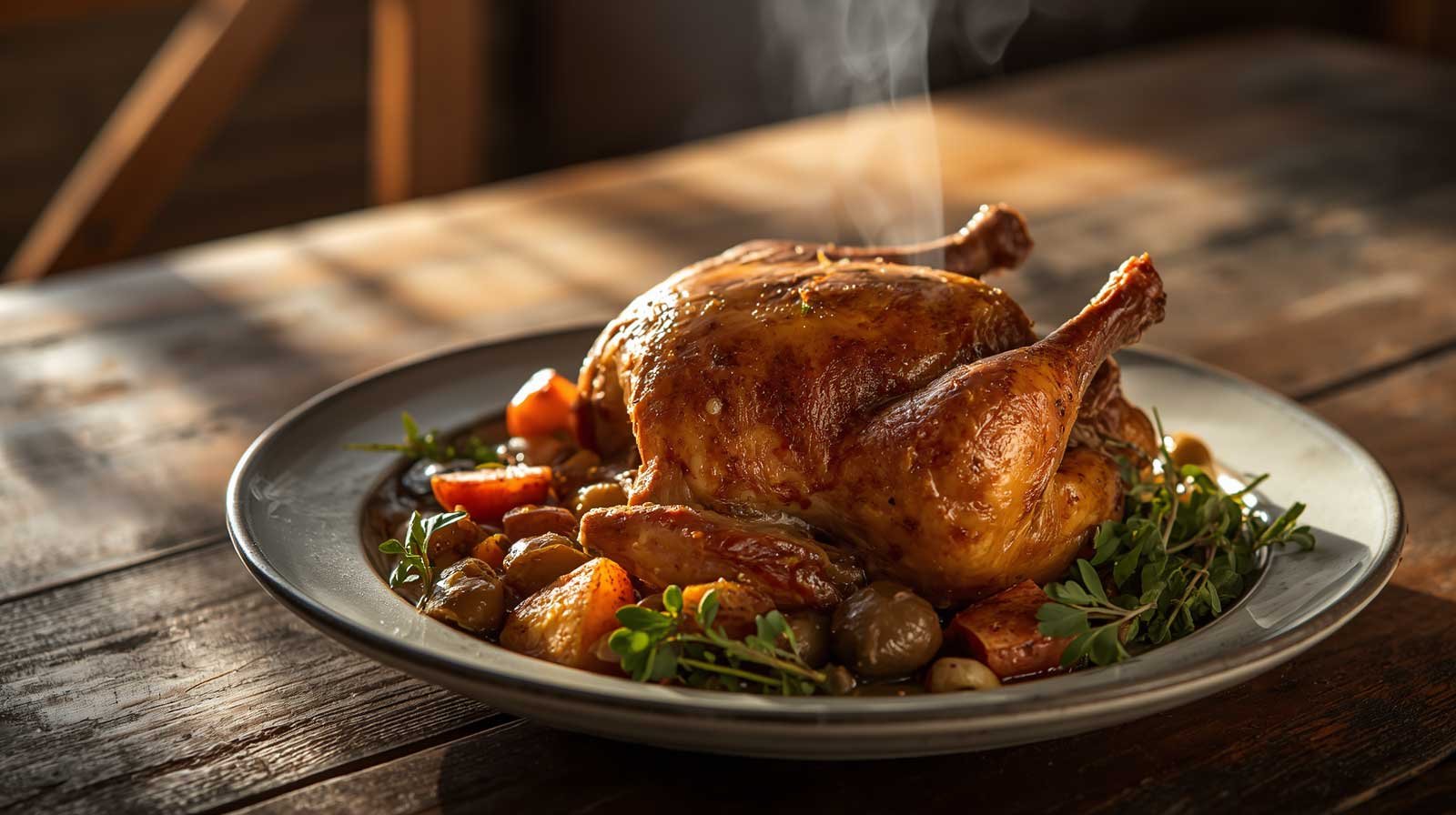
There’s something special about a roast chicken dinner on a Sunday. The chicken turns golden in the oven, the vegetables soak up all those delicious juices, and the whole kitchen smells wonderful. It’s the kind of meal that feels a little extra special without requiring anything complicated.
This Sunday roast chicken with root vegetables and easy pan gravy is one of those recipes you can make with simple ingredients and a little time in the oven. The chicken comes out juicy with crispy skin, while the carrots, potatoes, and onions become tender and golden around the edges.
The best part is the gravy. You can make it right in the same roasting pan using the flavorful drippings left behind by the chicken. There’s no need for a separate gravy packet or a long list of ingredients.
Serve everything straight from the roasting pan for a comforting family dinner, with extra gravy on the side for spooning over the chicken and vegetables.
Why You’ll Love This Roast Chicken Recipe
- Simple ingredients: You only need a whole chicken, a few root vegetables, butter, herbs, and pantry staples.
- A complete meal: The chicken and vegetables roast together, so you don’t need to prepare several separate side dishes.
- Crispy, golden skin: A little butter and a hot oven help the skin brown beautifully.
- Easy homemade gravy: The pan drippings create a rich, savory gravy that tastes much better than a quick mix from a packet.
- Perfect for Sunday dinner: It’s a comforting meal for family gatherings, a relaxed weekend lunch, or any evening when you want something hearty.
Ingredients You’ll Need
For the Roast Chicken
Whole chicken: Choose a chicken weighing around 4 to 5 pounds. Remove the giblets from the cavity if included, and pat the chicken dry before seasoning.
Butter: Softened unsalted butter helps the skin brown and adds flavor. You can use olive oil instead if you prefer.
Garlic: Fresh garlic adds a savory flavor to the chicken and vegetables.
Lemon: A few lemon wedges inside the cavity add a light, fresh aroma.
Fresh rosemary and thyme: These herbs pair beautifully with roast chicken. Dried herbs work too if fresh ones aren’t available.
Salt and black pepper: Season the chicken generously so the meat is flavorful throughout.
Paprika: A little paprika adds color and a mild warmth to the skin.
For the Root Vegetables
Potatoes: Yukon Gold or other waxy potatoes hold their shape well, while russet potatoes develop fluffy centers and crisp edges.
Carrots: Cut them into thick pieces so they soften without becoming too mushy.
Parsnips: These have a naturally sweet, earthy flavor that works especially well with roast chicken. If you can’t find them, use extra carrots or another root vegetable.
Yellow onion: Cut the onion into wedges so it becomes tender and caramelized as it roasts.
Olive oil: Helps the vegetables brown and prevents them from drying out.
Salt, pepper, and herbs: A little seasoning is all the vegetables need.
For the Easy Pan Gravy
Chicken drippings: The browned bits and juices left in the roasting pan provide the foundation for the gravy.
All-purpose flour: Thickens the gravy and gives it a smooth consistency.
Chicken stock: Adds moisture and savory flavor. Use low-sodium stock if possible so you can control the salt.
Butter: Optional, but a small amount can make the gravy taste richer.
Salt and black pepper: Adjust the seasoning at the end.
How to Make Sunday Roast Chicken with Root Vegetables
Step 1: Prepare the Chicken
Preheat your oven to 425°F (220°C).
Remove the chicken from its packaging and take out the giblets if they’re included. Pat the chicken dry all over with paper towels, including around the legs and wings.
Dry skin is important because excess moisture can prevent it from becoming crisp.
Place the chicken breast-side up in a roasting pan or a large oven-safe baking dish.
In a small bowl, mix the softened butter with minced garlic, chopped rosemary, thyme leaves, paprika, salt, and black pepper.
Gently loosen the skin over the breast with your fingers and spread a little of the butter mixture underneath. Rub the remaining mixture over the outside of the chicken.
Place a few lemon wedges and extra herb sprigs inside the cavity.
Tie the legs together loosely with kitchen twine if desired. This helps the chicken cook more evenly and gives it a neat shape.
Step 2: Prepare the Root Vegetables
Wash the potatoes, carrots, and parsnips. Peel them if you prefer, then cut them into roughly equal-sized pieces.
Cut the onion into thick wedges.
Place all the vegetables in a large bowl and toss with olive oil, salt, black pepper, and a little chopped rosemary or thyme.
Arrange the vegetables around the chicken in the roasting pan.
Try not to overcrowd the pan. The vegetables should have enough room to roast rather than steam. If necessary, use a second baking tray for some of the vegetables.
Step 3: Roast the Chicken
Place the roasting pan in the preheated oven.
Roast the chicken for approximately 1 hour and 20 minutes to 1 hour and 40 minutes, depending on its size. A 4 to 5-pound chicken may take around this long, but cooking time can vary with the oven and the shape of the bird.
After about 45 minutes, check the vegetables. Turn them with a spatula so they brown on different sides.
If the chicken skin is becoming too dark before the chicken is cooked through, loosely cover the breast with foil.
Avoid repeatedly opening the oven because this allows heat to escape and can extend the cooking time.
The chicken is ready when a food thermometer inserted into the thickest part of the breast and the innermost part of the thigh, without touching bone, reads at least 165°F (74°C). Check the stuffing or cavity area as appropriate if anything inside needs to reach a safe temperature.
The vegetables should be tender when pierced with a fork and nicely browned around the edges.
Step 4: Let the Chicken Rest
Once the chicken is cooked, carefully transfer it to a cutting board.
Loosely cover it with foil and let it rest for about 15 to 20 minutes before carving.
Resting gives the juices time to settle, making the chicken easier to carve and helping the meat stay moist.
While the chicken rests, transfer the roasted vegetables to a serving dish. If they need a little more color or tenderness, return them to the oven while you prepare the gravy.
Keep the roasting pan and its drippings. Those browned bits are where much of the gravy’s flavor comes from.
Step 5: Make the Easy Pan Gravy
Carefully pour the drippings from the roasting pan into a heatproof measuring cup or bowl. Spoon off excess fat, leaving about 2 tablespoons of fat for the gravy.
If your roasting pan is stovetop-safe, place it over medium heat. Otherwise, use a saucepan.
Add the reserved fat to the pan. Sprinkle in the flour and whisk for 1 to 2 minutes, scraping up any browned bits from the bottom.
The flour should form a smooth paste and turn lightly golden.
Gradually pour in the chicken stock, whisking continuously to prevent lumps.
Bring the mixture to a gentle simmer and cook for about 3 to 5 minutes, whisking until the gravy thickens.
If you have flavorful juices from the roasting pan, add them to the gravy as well. Taste and season with salt and black pepper as needed.
For a smoother gravy, strain it through a fine-mesh sieve before serving.
If the gravy becomes too thick, whisk in a little more stock. If it’s too thin, let it simmer for another minute or two.
Step 6: Carve and Serve
Place the rested chicken on a serving platter and carve it into portions.
Arrange the roasted potatoes, carrots, parsnips, and onions around the chicken.
Pour some of the warm gravy over the chicken if you like, and serve the rest in a gravy boat or small jug.
Bring everything to the table while it’s warm, and enjoy a classic Sunday roast dinner.
Tips for the Best Roast Chicken
Pat the chicken completely dry. This is one of the easiest ways to encourage golden, crispy skin. Take a little extra time to dry the surface before adding the butter.
Season under the skin. Spreading some of the garlic butter beneath the breast skin helps flavor the meat rather than just the outside.
Cut vegetables into similar-sized pieces. This helps them cook at roughly the same rate. Keep carrots and parsnips in reasonably thick chunks so they don’t become too soft.
Don’t overcrowd the roasting pan. Vegetables packed tightly together tend to steam instead of brown. Use a second tray if needed.
Use a thermometer rather than relying only on cooking time. Chicken sizes and ovens vary, so temperature is the most reliable way to check that the meat is safely cooked.
Rest the chicken before carving. Give it at least 15 minutes to rest so the juices can redistribute.
Scrape up the browned bits for the gravy. These flavorful pieces add depth to the gravy. Just avoid using any blackened, burnt bits that could make it taste bitter.
What to Serve with Sunday Roast Chicken
The roasted vegetables and pan gravy make this meal quite complete, but a few extra sides can turn it into a larger Sunday feast.
- Yorkshire puddings: Their crisp edges and soft centers are perfect for soaking up gravy.
- Buttered green beans: A fresh green vegetable adds color and balances the richness of the meal.
- Roasted Brussels sprouts: Roast them with a little olive oil, salt, and pepper until the edges are crisp.
- Creamy mashed potatoes: These are especially good if you want extra gravy on the table.
- Dinner rolls: Soft rolls are useful for soaking up the last of the gravy.
- Simple green salad: A lightly dressed salad provides a refreshing contrast to the warm roast.
If you want to keep things simple, the chicken, root vegetables, and gravy are more than enough for a satisfying dinner.
Make-Ahead Tips
You can prepare a few parts of this recipe ahead of time to make Sunday cooking easier.
The night before: Mix the garlic herb butter and refrigerate it in a covered container. You can also peel and cut sturdy vegetables such as carrots and parsnips, then refrigerate them in a covered container.
A few hours before cooking: Seasoning the chicken in advance can help the flavor develop. Keep the chicken refrigerated while it sits with the seasoning, and pat the skin dry again if moisture collects on the surface.
Just before roasting: Cut the potatoes and prepare the onion. Toss the vegetables with oil and seasonings shortly before putting them in the oven.
After cooking: The gravy can be prepared ahead and refrigerated, although freshly made pan gravy has the advantage of using the drippings from the roast. Reheat prepared gravy gently, adding a splash of stock if needed.
Don’t leave raw chicken or prepared perishable ingredients sitting at room temperature for extended periods.
How to Store and Reheat Leftovers
If you have leftover roast chicken, remove the meat from the bones and place it in shallow, airtight containers. Refrigerate it within 2 hours of cooking.
Store the chicken, vegetables, and gravy separately when possible. This makes reheating easier and helps prevent the vegetables from becoming overly soft.
Refrigerated cooked chicken is generally best used within 3 to 4 days. Cooked vegetables and gravy should also be refrigerated promptly and used within a few days.
To reheat, place the chicken and vegetables in an oven-safe dish with a small splash of stock or water. Cover loosely with foil and warm in a 325°F (165°C) oven until heated through.
Reheat gravy in a saucepan over low to medium heat, stirring occasionally. Add a little stock or water if it has thickened in the refrigerator.
When reheating leftovers, make sure they reach 165°F (74°C) throughout.
You can also freeze leftover roast chicken and gravy in suitable freezer-safe containers. For the best quality, use them within a few months. Roasted potatoes and other vegetables may soften after freezing, but they can still be useful in soups, casseroles, and other cooked dishes.
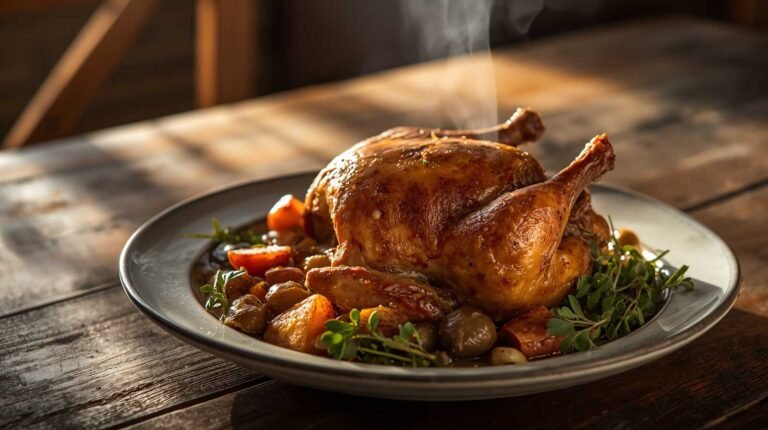
Sunday Roast Chicken with Root Vegetables and Easy Pan Gravy
Ingredients
22 itemsFor the Chicken
For the Root Vegetables
For the Pan Gravy
Instructions
11 steps-
01
Preheat the oven to 425°F (220°C). Remove the giblets from the chicken if included, and pat the chicken completely dry with paper towels.
-
02
In a small bowl, combine the softened butter, garlic, rosemary, thyme, paprika, salt, and black pepper.
-
03
Gently loosen the skin over the chicken breast and spread some of the butter mixture underneath. Rub the remaining butter mixture over the outside of the chicken. Place the lemon wedges inside the cavity.
-
04
Toss the potatoes, carrots, parsnips, and onion with olive oil, salt, pepper, and fresh herbs. Arrange the vegetables around the chicken in a roasting pan.
-
05
Roast for approximately 1 hour and 20 minutes to 1 hour and 40 minutes, checking the vegetables after about 45 minutes and turning them as needed. Cover the chicken breast loosely with foil if the skin browns too quickly.
-
06
Check the chicken with a food thermometer. The thickest part of the breast and the innermost part of the thigh should reach at least 165°F (74°C). Make sure the vegetables are tender.
-
07
Transfer the chicken to a cutting board, cover loosely with foil, and let it rest for 15 to 20 minutes. Transfer the vegetables to a serving dish and keep warm.
-
08
Carefully collect the pan drippings. Spoon off excess fat, reserving about 2 tablespoons of fat for the gravy.
-
09
Place a stovetop-safe roasting pan over medium heat, or use a saucepan. Add the reserved fat and whisk in the flour. Cook for 1 to 2 minutes, scraping up the browned bits.
-
10
Gradually whisk in the chicken stock and any flavorful reserved drippings. Simmer for 3 to 5 minutes, stirring until the gravy thickens. Season with salt and black pepper to taste.
-
11
Carve the rested chicken and serve with the roasted root vegetables and warm pan gravy.
Chef's Notes & Tips
- Patting the chicken dry helps the skin become crisp and golden.
- Use a food thermometer to check doneness rather than relying only on cooking time.
- If the roasting pan is crowded, roast some of the vegetables on a separate tray.
- Add extra stock if the gravy is too thick, or simmer it a little longer if it’s too thin.
- Store leftovers in airtight containers in the refrigerator and use within 3 to 4 days.