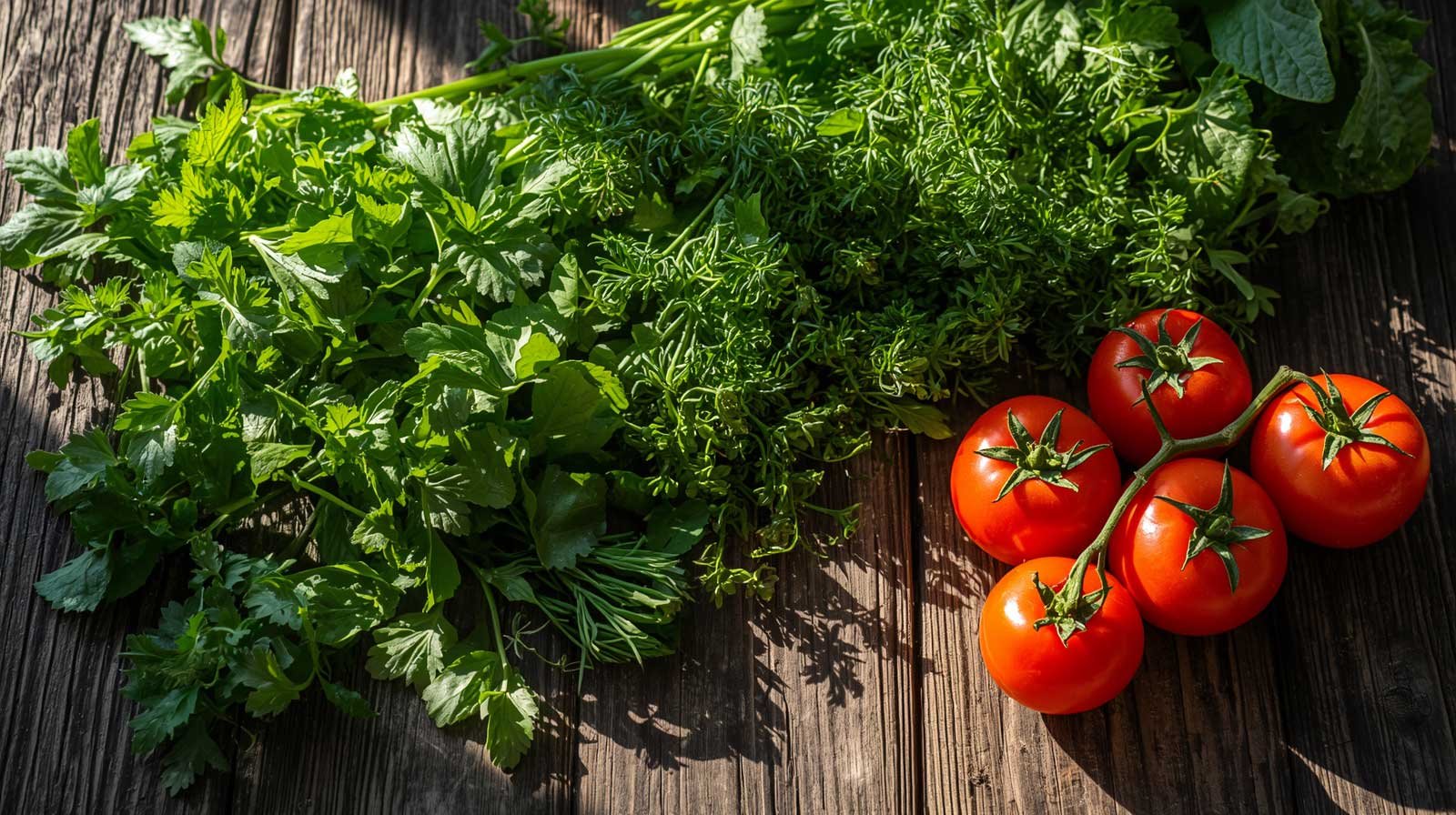
Fresh herbs, leafy greens, and ripe tomatoes can make almost any meal taste better. A handful of fresh parsley brightens up a soup, crisp spinach makes a quick salad, and juicy tomatoes bring flavor to everything from sandwiches to pasta.
The problem is that these ingredients can go bad surprisingly quickly. Herbs wilt, greens turn slimy, and tomatoes sometimes become soft before you get a chance to use them.
The good news is that a few simple storage habits can help your produce stay fresh for longer. You don’t need special containers or expensive kitchen gadgets. Most of the time, a clean container, a paper towel, and the right spot in your kitchen or refrigerator are all you need.
Here’s how to store fresh herbs, leafy greens, and tomatoes so you can enjoy them throughout the week and waste less food.
How to Store Fresh Herbs
Fresh herbs are delicate, and different varieties have slightly different storage needs. Some behave more like flowers and prefer a little water, while others last longer when kept dry and wrapped loosely.
Before storing any herbs, remove wilted, yellow, or damaged leaves. If the herbs are dirty, rinse them gently and dry them thoroughly before putting them away. Excess moisture can encourage spoilage, especially if the leaves are packed tightly together.
1. Store Soft Herbs Like Parsley, Cilantro and Mint in Water
Soft herbs such as parsley, cilantro, mint, and dill often stay fresh longer when their stems have access to water.
Here’s what to do:
- Trim a small amount from the bottom of the stems.
- Place the herbs upright in a clean glass or jar with a little water at the bottom.
- Keep the leaves above the waterline.
- Loosely cover the leaves with a clean plastic bag if you like.
- Store the jar in the refrigerator, except for basil, which usually does better at room temperature.
- Change the water every day or two, and remove any yellow or slimy leaves.
This method works particularly well for cilantro and parsley. Depending on their freshness when purchased and your refrigerator’s conditions, they may stay usable for a week or sometimes longer.
2. Store Basil at Room Temperature
Basil is more sensitive to cold than many other herbs. Refrigeration can cause its leaves to darken and develop soft spots.
For fresh basil, trim the stems and place them in a glass of water, just as you would a small bunch of flowers. Keep the glass on your kitchen counter, away from direct sunlight, heat, and the stove.
Change the water regularly and remove any damaged leaves.
Fresh basil usually lasts several days this way, although its shelf life depends on how fresh it was when you bought it.
If your kitchen is very hot, check the leaves daily. You can also freeze extra basil for cooking if you won’t use it in time.
3. Wrap Rosemary, Thyme and Sage in a Paper Towel
Hardier herbs such as rosemary, thyme, and sage have sturdier leaves and stems than parsley or cilantro.
To store them:
- Check the herbs for damaged leaves and remove them.
- If the herbs are wet, let them dry thoroughly.
- Wrap them loosely in a slightly damp paper towel.
- Place the wrapped herbs in a reusable container or loosely closed bag.
- Store them in the refrigerator’s crisper drawer.
The paper towel should be slightly damp, not dripping wet. Too much moisture can encourage mold and make the herbs spoil faster.
Check the herbs every few days and replace the towel if it becomes wet or dirty.
4. Keep Herbs Dry Until You’re Ready to Use Them
Washing herbs before storage is fine as long as you dry them well. Wet leaves packed into a container can deteriorate quickly.
A salad spinner can help remove excess water from delicate herbs. You can also spread them on a clean kitchen towel and gently pat them dry.
If you’re short on time, storing unwashed herbs in a breathable bag and washing them just before use can also work well, provided they’re not dirty or damp when you put them away.
Helpful tip: If you have more herbs than you can use in a week, chop them and freeze them in small portions. You can freeze chopped herbs in ice cube trays with a little water or olive oil, depending on how you plan to use them. Frozen herbs are best for cooked dishes because they usually lose some of their fresh texture.
How to Store Leafy Greens
Leafy greens like spinach, lettuce, kale, arugula, and mixed salad leaves can lose their crispness quickly. The biggest storage challenge is finding the right balance between preventing the leaves from drying out and keeping excess moisture under control.
1. Store Lettuce Without Crushing the Leaves
Whole heads of lettuce generally stay fresh longer than leaves that have already been cut or torn.
If you have a whole head of lettuce, remove any damaged outer leaves. Keep the head intact and store it in the refrigerator’s crisper drawer.
You can place it in a loosely closed bag or a suitable produce container to help retain moisture without trapping too much condensation.
For loose lettuce leaves, gently separate them and remove any damaged pieces. If you wash them, dry them thoroughly before storing.
Place the leaves in a container lined with a clean, dry paper towel. Add another paper towel on top if needed, then close the container loosely or use one designed for storing produce.
The paper towel helps absorb excess moisture. Replace it if it becomes damp.
2. Keep Spinach Fresh and Crisp
Spinach is delicate and can turn slimy when excess moisture collects in the bag or container.
When you bring spinach home, remove any leaves that are already yellow, bruised, or slimy.
If the spinach is already clean and dry, you can transfer it directly into a container lined with a dry paper towel. If it needs washing, rinse it gently and dry it well before storage.
Keep the container in the refrigerator, preferably in the crisper drawer.
Avoid pressing the leaves tightly into a small container. A little room helps prevent bruising and makes it easier to spot damaged leaves before they affect the rest.
Check the spinach every couple of days and remove any leaves that begin to spoil.
3. Store Kale and Other Sturdy Greens
Kale, collard greens, and similar sturdy leaves can generally handle storage a little better than delicate salad greens.
Remove damaged leaves and excess dirt. If you wash them before storage, dry them thoroughly.
Wrap the greens loosely in a clean paper towel and place them in a reusable bag or container in the refrigerator.
If you prefer to wash them just before cooking, store them unwashed as long as they’re dry and reasonably clean.
Sturdy greens can often last longer than delicate lettuce, but freshness varies depending on how recently they were harvested and how they were handled before purchase.
4. Keep Salad Greens Away From Excess Moisture
A common mistake is putting wet greens into a sealed container and forgetting about them.
When moisture collects inside the container, the leaves can become slippery and spoil more quickly. On the other hand, greens left completely exposed to dry refrigerator air may wilt.
To get the balance right:
- Dry washed leaves thoroughly.
- Use a clean container or bag.
- Add a dry paper towel to absorb excess moisture.
- Avoid packing greens too tightly.
- Check regularly for condensation and damaged leaves.
- Keep the greens refrigerated.
Helpful tip: If your lettuce or spinach looks slightly wilted but is otherwise fresh, try soaking it briefly in a bowl of cold water. This can help some leaves regain their crispness. Drain and dry them thoroughly before using. Discard greens that are slimy, moldy, or have an unpleasant smell.
How to Store Tomatoes So They Stay Flavorful
Tomatoes need a little different treatment from most leafy greens and herbs. Their storage method depends on how ripe they are and how soon you plan to eat them.
If you’ve ever refrigerated a perfectly ripe tomato only to find that it tastes less flavorful afterward, you’re not imagining things. Cold temperatures can affect the texture and aroma of tomatoes, particularly when they’re stored in the refrigerator for an extended period.
1. Store Unripe Tomatoes at Room Temperature
If your tomatoes are still firm and need time to ripen, leave them on the counter.
Place them in a single layer, ideally with the stem end facing down, on a plate, tray, or shallow basket. Keep them away from direct sunlight and sources of heat.
Check them daily. As they ripen, their color deepens and they begin to soften slightly.
Avoid storing unripe tomatoes in a cold refrigerator because low temperatures can interfere with normal ripening and affect their flavor.
2. Keep Ripe Tomatoes on the Counter if You’ll Use Them Soon
Fully ripe tomatoes are usually best kept at room temperature if you plan to use them within a day or two.
Keep them in a cool spot away from sunlight. Avoid stacking them too high because the weight can bruise the tomatoes underneath.
If a tomato has a small bruise, use it soon and check that the damaged area hasn’t started to spoil.
For cut tomatoes, the rule is different. Once a tomato has been sliced, refrigerate it promptly in a clean, covered container and use it within a few days.
3. Refrigerate Fully Ripe Tomatoes if You Need More Time
Sometimes tomatoes ripen faster than you can eat them. In that case, refrigeration can help slow further ripening and extend their usable life.
Place fully ripe, uncut tomatoes in the refrigerator, preferably in a suitable container that protects them from being crushed.
When possible, let refrigerated tomatoes sit at room temperature for a little while before serving. This may help bring back some of their aroma and improve the eating experience.
Refrigeration isn’t ideal for every tomato in every situation, but preventing ripe tomatoes from becoming overripe and spoiled is more important than leaving them on the counter for the sake of flavor.
4. Keep Tomatoes Away From Delicate Produce
Ripening tomatoes release ethylene, a natural gas that can speed up ripening in certain fruits and vegetables.
If you want delicate greens to last longer, avoid keeping them right next to ripening tomatoes in a crowded fruit bowl or produce container.
You don’t need to separate every item in your kitchen completely. Simply storing tomatoes apart from leafy greens can help you manage ripening and spoilage more easily.
Helpful tip: If you have too many ripe tomatoes, chop and freeze them for soups, sauces, and stews. Frozen tomatoes won’t retain their original firm texture, but they’re excellent for cooked dishes.
Should You Wash Produce Before Storing It?
There isn’t one rule that works for every type of produce.
Washing everything immediately can be convenient, but it also means you need enough time and space to dry everything properly. Storing wet herbs and greens can lead to faster spoilage.
Here’s a simple approach:
- Fresh herbs: Wash before storage if needed, but dry thoroughly. Otherwise, wash them just before use.
- Leafy greens: Wash and dry thoroughly before storing, or keep them dry and wash them before eating.
- Whole tomatoes: Store them unwashed and rinse under running water just before cutting or eating.
- Cut produce: Refrigerate promptly in a clean, covered container.
Always wash produce under clean running water before eating or preparing it. Don’t use soap or household cleaning products on fruits and vegetables.
If you buy prewashed salad greens labeled as ready to eat, follow the package instructions rather than washing them again automatically.
The Best Way to Organize Your Refrigerator
Even well-prepared produce can spoil early if it’s forgotten at the back of the refrigerator.
A little organization can help you use ingredients before they go bad.
Use the Crisper Drawer
The crisper drawer is a useful place to store most leafy greens and refrigerated herbs. It helps protect delicate produce from being crushed and exposed directly to refrigerator airflow.
Keep tomatoes that need refrigeration in a separate area where they won’t be squashed.
Keep Older Produce Near the Front
When you bring home fresh groceries, move older items toward the front of the refrigerator and place newer purchases behind them.
This simple habit makes it easier to remember what needs to be used first.
Avoid Overpacking Containers
Crowded containers can crush leaves and make it difficult for air to circulate. Use containers large enough to hold your greens without compressing them.
You don’t need to buy special produce organizers. Clean food-safe containers, reusable bags, and paper towels are usually enough.
Check Your Refrigerator Temperature
Your refrigerator should generally be kept at or below 40°F (4°C) to help slow the growth of harmful bacteria.
Avoid leaving perishable produce at room temperature for extended periods, especially in a warm kitchen. Cut tomatoes and other cut produce should be refrigerated promptly.
Common Storage Mistakes to Avoid
A few everyday habits can make fresh produce spoil faster than necessary.
Storing wet greens in a sealed container: Excess moisture can encourage slime and spoilage. Dry the leaves well and replace damp paper towels.
Leaving damaged leaves in the container: One spoiled leaf can affect nearby produce. Check your herbs and greens regularly and remove anything that is deteriorating.
Refrigerating every tomato immediately: Unripe tomatoes generally ripen better at room temperature. Refrigerate fully ripe tomatoes when you need extra storage time.
Washing herbs without drying them: Water trapped between leaves can shorten their shelf life. Use a salad spinner or clean towel to remove excess moisture.
Forgetting about produce in the crisper drawer: Out of sight often means out of mind. Keep ingredients you need to use soon where you can see them.
Storing cut produce on the counter: Once tomatoes and other produce have been cut, refrigerate them promptly in a clean, covered container.
Final Thoughts
Keeping fresh herbs, greens, and tomatoes in good condition doesn’t have to be complicated. The key is understanding what each ingredient needs.
Store tender herbs with a little water or in a lightly wrapped container, keep leafy greens clean and dry, and let unripe tomatoes ripen on the counter. Once tomatoes are fully ripe, refrigerate them if you need extra time.
Most importantly, check your produce every few days and use the items that are ripest first. With a few simple habits, you can enjoy fresher ingredients, waste less food, and make everyday cooking a little easier.