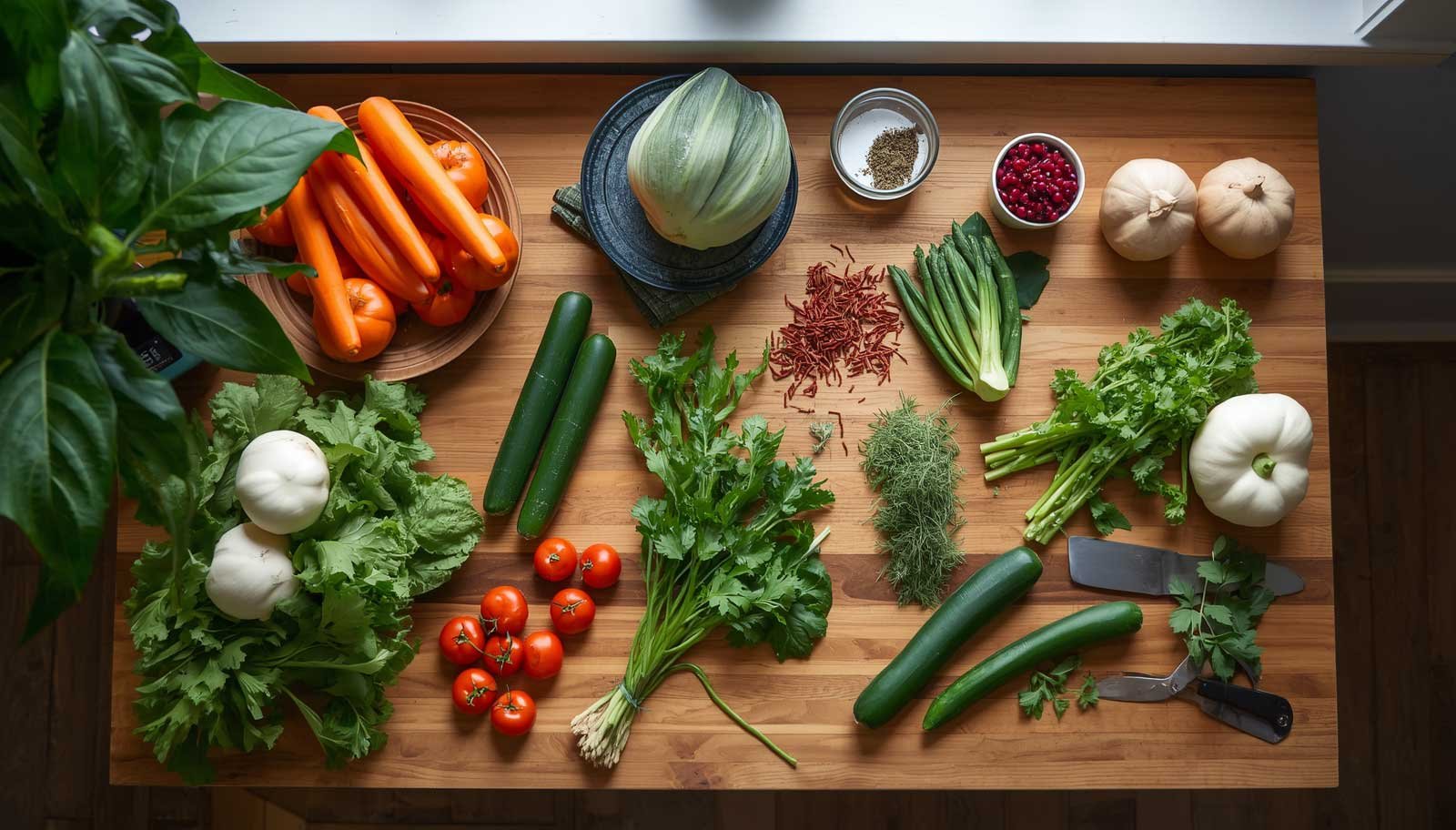
There’s something satisfying about coming home from the farmers market with a basket full of fresh vegetables, fragrant herbs, ripe tomatoes, and seasonal produce. The challenge comes later in the week, when you’re tired, hungry, and wondering how to turn those ingredients into dinner without making another trip to the grocery store.
That’s where a little meal planning makes all the difference.
With one thoughtfully planned farmers market haul, you can prepare five delicious weeknight dinners using overlapping ingredients, simple cooking techniques, and a few pantry staples. Instead of buying separate ingredients for every meal, you’ll use the same vegetables, herbs, and proteins in different ways to keep your dinners interesting while reducing food waste.
This practical meal prep plan is designed for busy households that want fresh, seasonal meals without spending every evening in the kitchen. You’ll make a hearty sheet-pan dinner, a quick pasta, a comforting soup, flavorful grain bowls, and an easy frittata, all built around one coordinated shopping list.
The best part? You don’t have to cook five complete dinners on Sunday. A little preparation ahead of time makes assembling each meal much easier during the week.
Why Plan Your Dinners Around One Farmers Market Haul?
Farmers markets are wonderful places to find seasonal produce, but buying without a plan can leave you with vegetables that don’t fit together or ingredients that spoil before you use them.
Planning five dinners around one shopping trip helps you make the most of what you buy.
Save Time During the Week
Washing vegetables, chopping onions, preparing grains, and making a simple dressing can take up valuable time on a busy evening.
Doing some of this work in advance means you can focus on cooking rather than starting every meal from scratch.
Reduce Food Waste
Buying ingredients that appear in several meals helps you use them before they spoil.
For example, a bunch of kale can become part of a pasta dish, a grain bowl, and a frittata. A bag of carrots can be roasted for dinner and added to soup later in the week.
Spend Your Grocery Budget More Wisely
Seasonal vegetables are often good-value choices, although prices vary by location, season, and farm. Planning around what’s abundant at the market can help you avoid expensive specialty ingredients that you’ll only use once.
Enjoy More Variety Without Buying More Ingredients
Using the same ingredient doesn’t mean eating the same dinner every night.
Roasted zucchini tastes different when served with chicken and potatoes than it does tossed into pasta with garlic and Parmesan. A few changes in seasoning, cooking method, and presentation can turn familiar ingredients into completely different meals.
The Plan at a Glance: Five Dinners, One Shopping Trip
This meal plan is designed for approximately four servings per dinner. Adjust the quantities according to your household size and appetite.

Monday: Sheet-Pan Chicken and Seasonal Vegetables
Prep: 15 minutes · Cook: 35–45 minutes
Roast chicken thighs with potatoes, carrots, zucchini, garlic, and fresh thyme for an easy one-pan dinner.

Tuesday: Garden Vegetable Pasta
Prep: 10 minutes · Cook: 20 minutes
Toss pasta with cherry tomatoes, zucchini, spinach, garlic, basil, and Parmesan.

Wednesday: Hearty Vegetable and White Bean Soup
Prep: 10 minutes · Cook: 30 minutes
Simmer carrots, celery, tomatoes, white beans, and leafy greens in a savory herb broth.

Thursday: Roasted Vegetable and Chickpea Bowls
Prep: 10 minutes · Cook: 15–20 minutes
Combine roasted vegetables, chickpeas, cooked grains, fresh herbs, and a bright lemon dressing.

Friday: Farmers Market Vegetable Frittata
Prep: 10 minutes · Cook: 20–25 minutes
Use remaining vegetables, spinach, eggs, and cheese to make a golden, satisfying frittata.
The meals share several ingredients, but each has its own flavor profile and texture. You can also substitute vegetables based on what looks best at your local market.
Your Farmers Market Shopping List
The quantities below provide a starting point for a household of four eating five dinners. Pantry ingredients such as salt, pepper, olive oil, and dried spices are assumed to be available already.
Fresh Vegetables and Herbs
- 1.5 pounds (680 g) potatoes
- 1 pound (450 g) carrots
- 3 medium zucchini
- 1 pint cherry tomatoes
- 1 bunch kale or spinach, approximately 8–10 ounces
- 1 bunch celery
- 2 medium yellow onions
- 1 head garlic
- 1 bunch fresh basil
- 1 small bunch fresh parsley
- 1 small bunch fresh thyme
- 2 lemons
Protein and Dairy
- 1.5–2 pounds (680–900 g) chicken thighs
- 1 dozen eggs
- 1 can white beans, 15 ounces
- 1 can chickpeas, 15 ounces
- 4 ounces Parmesan or another hard cheese
- 4–6 ounces shredded cheddar or crumbled feta, optional
Grains and Pantry Ingredients
- 1 pound pasta
- 1 pound brown rice, quinoa, or another grain
- 1 can crushed tomatoes, 14–15 ounces
- 4–6 cups low-sodium vegetable broth
- 1 small container plain yogurt or tahini, optional for dressing
- Olive oil
- Red wine vinegar or apple cider vinegar
- Dried oregano
- Smoked paprika
- Salt and black pepper
Shopping tip: Start by checking what you already have in your pantry. You may already own rice, pasta, spices, and oil, which can make the market trip much more affordable.
The list is flexible rather than fixed. If tomatoes are expensive or out of season, use another vegetable that is abundant and reasonably priced.
Sunday Prep: Get Ready for the Week in About an Hour
You don’t need to cook all five meals in advance. Instead, prepare the ingredients that take the most time and store them safely so they’re ready when you need them.
Step 1: Wash and Organize the Produce
Sort your vegetables by how quickly they need to be used.
Use tender greens and very ripe tomatoes early in the week. Store sturdy carrots, potatoes, and onions for later meals.
Wash produce according to food-safety guidance, then dry it thoroughly before storage. Keep delicate herbs separate from vegetables that release moisture.
For the best quality, avoid washing all delicate greens far in advance if you cannot dry them completely.
Step 2: Chop the Sturdy Vegetables
Peel and cut the carrots, dice the onions, and chop the celery. Store them in separate airtight containers in the refrigerator.
Keep potatoes whole until needed if possible. Cut potatoes can discolor and may require specific storage precautions, while whole potatoes are usually best kept in a cool, dark, well-ventilated place rather than the refrigerator.
Slice the zucchini closer to the day you’ll cook it to preserve its texture.
Step 3: Prepare a Simple Herb Dressing
Whisk together:
- 3 tablespoons olive oil
- 2 tablespoons lemon juice
- 1 teaspoon Dijon mustard
- 1 tablespoon finely chopped parsley
- Salt and black pepper to taste
Store the dressing in a sealed jar in the refrigerator and shake before using.
This dressing works well over grain bowls, roasted vegetables, and even a simple side salad.
For food safety and quality, keep prepared dressings refrigerated and use them promptly, especially if they contain fresh herbs.
Step 4: Cook a Batch of Grains
Prepare enough brown rice or quinoa for the Thursday grain bowls. Depending on the grain, about 1 cup dry rice or quinoa usually produces roughly 3 cups cooked.
Cool cooked grains promptly in shallow containers and refrigerate within two hours. Keep the refrigerator at 40°F (4°C) or below, and use cooked rice within 3–4 days. Reheat it thoroughly before serving.
If you’d rather avoid storing cooked grains for several days, prepare a smaller batch on Thursday or freeze portions promptly after cooling.
Step 5: Prepare a Few Flavor Boosters
Mince a small amount of garlic, chop some parsley, and grate the Parmesan if you prefer to do this in advance.
Store prepared ingredients in separate, covered containers in the refrigerator.
Don’t chop all the basil on Sunday. Fresh basil tends to darken after cutting, so tear it just before serving your Tuesday pasta.
Monday Dinner: Sheet-Pan Chicken and Seasonal Vegetables

This simple sheet-pan dinner starts the week with a satisfying combination of roasted chicken, potatoes, carrots, and zucchini. Everything cooks together, and the oven does most of the work.
Ingredients
- 1.5–2 pounds chicken thighs
- 1 pound potatoes, cut into chunks
- 3 carrots, cut into thick pieces
- 1 zucchini, cut into half-moons
- 3 garlic cloves, minced
- 2 tablespoons olive oil
- 1 teaspoon dried oregano
- 1 teaspoon fresh thyme leaves
- Salt and black pepper
Instructions
- Preheat the oven to 425°F (220°C).
- Toss the potatoes and carrots with olive oil, half the garlic, oregano, salt, and pepper.
- Spread the vegetables across a large baking sheet and roast for about 15 minutes.
- Season the chicken with the remaining garlic, thyme, salt, and pepper.
- Add the chicken and zucchini to the baking sheet, spreading everything into a single layer where possible.
- Roast for another 20–30 minutes, until the vegetables are tender and the thickest part of the chicken reaches 165°F (74°C).
- Rest the chicken briefly before serving.
If the pan is crowded, use two baking sheets to encourage browning instead of steaming.
Meal prep bonus: Roast a few extra carrots and zucchini if you have room. Refrigerate the leftovers promptly for Thursday’s grain bowls.
Tuesday Dinner: Quick Garden Vegetable Pasta

This bright, simple pasta turns the week’s fresh produce into a comforting meal. Cherry tomatoes release their juices in the skillet, creating a light sauce that coats the pasta without requiring cream.
Ingredients
- 12 ounces pasta
- 1 zucchini, diced
- 1 pint cherry tomatoes, halved
- 3 cups fresh spinach or chopped kale
- 2 garlic cloves, minced
- 2 tablespoons olive oil
- 1/3 cup grated Parmesan
- A handful of fresh basil
- Salt and black pepper
Instructions
- Bring a large pot of salted water to a boil and cook the pasta according to the package directions.
- Meanwhile, heat olive oil in a large skillet over medium heat.
- Add the zucchini and cook for 4–5 minutes until lightly golden.
- Add the garlic and cherry tomatoes. Cook for another 5–7 minutes, stirring occasionally, until the tomatoes soften and release their juices.
- Add the spinach or kale and cook until wilted. Kale may need a few extra minutes.
- Reserve about 1/2 cup pasta water, then drain the pasta.
- Toss the pasta with the vegetables, Parmesan, and a splash of pasta water until everything is lightly coated.
- Tear in fresh basil, season to taste, and serve.
Make it your own: Add white beans for extra protein, red pepper flakes for heat, or a spoonful of pesto for a stronger basil flavor.
Wednesday Dinner: Hearty Vegetable and White Bean Soup

By Wednesday, a warm bowl of soup can be exactly what you need. This recipe uses carrots, celery, onion, tomatoes, white beans, and leafy greens to create a filling dinner from simple ingredients.
Ingredients
- 1 onion, diced
- 2 carrots, diced
- 2 celery stalks, diced
- 2 garlic cloves, minced
- 1 can white beans, drained and rinsed
- 1 can crushed tomatoes, 14–15 ounces
- 4 cups vegetable broth
- 2 cups chopped kale or spinach
- 1 tablespoon olive oil
- 1 teaspoon dried oregano
- Salt and black pepper
- Grated Parmesan, optional
Instructions
- Heat olive oil in a large pot over medium heat.
- Add the onion, carrots, and celery. Cook for 6–8 minutes until the vegetables begin to soften.
- Stir in the garlic and oregano and cook for 30 seconds.
- Add the crushed tomatoes, white beans, and vegetable broth.
- Bring to a gentle boil, then reduce the heat and simmer for 20 minutes.
- Stir in the kale and cook until tender, or add spinach during the final 2–3 minutes.
- Taste and adjust the seasoning.
- Serve with grated Parmesan and crusty bread if desired.
Meal prep bonus: Soup is an excellent make-ahead dinner. Cool leftovers promptly in shallow containers and refrigerate for 3–4 days, or freeze portions for longer storage.
Thursday Dinner: Roasted Vegetable and Chickpea Bowls

Grain bowls are one of the easiest ways to transform leftover vegetables into a fresh meal. For this version, roasted carrots and zucchini are paired with chickpeas, cooked grains, herbs, and a tangy dressing.
Ingredients
- 3 cups cooked brown rice or quinoa
- 1 can chickpeas, drained and rinsed
- 2 cups leftover roasted vegetables
- 1/2 teaspoon smoked paprika
- 1 tablespoon olive oil
- 2 tablespoons lemon-herb dressing
- Fresh parsley
- Optional plain yogurt or tahini sauce
Instructions
- Preheat the oven to 400°F (200°C) if the vegetables need reheating or extra roasting.
- Pat the chickpeas dry, then toss them with olive oil, smoked paprika, salt, and pepper.
- Roast the chickpeas for 15–20 minutes until lightly crisp, shaking the tray once during cooking.
- Warm the cooked grains and leftover vegetables until steaming hot.
- Divide the grains among four bowls.
- Add the vegetables and chickpeas, then drizzle with the lemon-herb dressing.
- Finish with chopped parsley and a spoonful of yogurt or tahini sauce if desired.
Easy variation: Add sliced avocado, crumbled feta, or a handful of fresh greens if you have them available.
Friday Dinner: Farmers Market Vegetable Frittata

A frittata is an ideal end-of-week dinner because it can accommodate many vegetables without requiring a strict recipe. It also helps use up small amounts of produce before your next shopping trip.
Ingredients
- 8 large eggs
- 1/4 cup milk
- 1 small zucchini, diced
- 1 cup spinach or chopped kale
- 1/2 cup cherry tomatoes, halved
- 1/2 cup shredded cheddar or crumbled feta
- 1 tablespoon olive oil
- Salt and black pepper
- Fresh parsley or basil
Instructions
- Preheat the oven to 375°F (190°C).
- Whisk the eggs and milk in a bowl. Stir in the cheese, salt, and pepper.
- Heat olive oil in an oven-safe skillet over medium heat.
- Add the zucchini and cook for 4–5 minutes until softened.
- Add the spinach and cook until wilted. If using kale, cook until tender.
- Spread the vegetables evenly across the skillet and add the tomatoes.
- Pour the egg mixture over the vegetables and cook gently for 2–3 minutes, until the edges begin to set.
- Transfer the skillet to the oven and bake for 12–18 minutes, until the center is set and the eggs are fully cooked.
- Garnish with fresh herbs, slice into wedges, and serve with a green salad or toasted bread.
Use an oven-safe skillet and protect the handle when removing it from the oven.
Meal prep bonus: Leftover frittata can be refrigerated and used for breakfast or lunch the following day. Refrigerate promptly and reheat until steaming hot.
How to Keep These Five Dinners Interesting
One of the biggest challenges with meal prep is avoiding the feeling that you’re eating the same meal repeatedly.
The solution is to reuse ingredients while changing their preparation and seasoning.
Change the Cooking Method
Roasted carrots have a sweet, caramelized flavor. Carrots simmered in soup become softer and absorb the broth. Finely diced carrots in a frittata add a different texture again.
The same vegetable can feel completely different depending on how you cook it.
Use Fresh Herbs Strategically
Basil works especially well in the pasta, while thyme adds depth to roasted chicken and parsley brightens grain bowls and soup.
If your farmers market has other herbs available, such as dill, cilantro, or chives, use them to change the flavor profile.
Make Two Simple Sauces
A lemon-herb dressing and a yogurt or tahini sauce can make leftovers feel new.
For a quick yogurt sauce, combine 1/2 cup plain yogurt with 1 tablespoon lemon juice, a small grated garlic clove, salt, and chopped parsley. Refrigerate until serving.
Keep a Few Pantry Staples on Hand
Pasta, canned beans, rice, broth, and eggs help turn fresh produce into complete meals. They also provide flexibility if a vegetable is unavailable or you need to replace an ingredient.
How to Store Your Farmers Market Ingredients Safely
Fresh produce can last for several days when stored properly, but different ingredients have different needs.
- Leafy greens: Keep refrigerated in a container with a clean, dry paper towel to absorb excess moisture.
- Fresh herbs: Store according to the type of herb. Tender herbs such as basil can be sensitive to cold, while parsley and cilantro often keep well in the refrigerator.
- Carrots and celery: Refrigerate in suitable produce bags or containers to help maintain freshness.
- Tomatoes: Store whole tomatoes at room temperature when they are not fully ripe and you plan to use them soon. Refrigeration can slow spoilage for very ripe tomatoes, though it may affect flavor and texture.
- Potatoes and onions: Keep them in a cool, dark, dry, well-ventilated place, and store them separately when possible.
- Cooked grains and meals: Refrigerate promptly in shallow containers and follow safe storage times. Reheat leftovers thoroughly.
Do not leave cooked food at room temperature for more than two hours, or one hour when temperatures are above 90°F (32°C). Keep your refrigerator at 40°F (4°C) or below.
For this meal plan, it’s best to prepare only what you can safely store. Freeze suitable portions if you know you won’t use them within the recommended refrigeration window.
How to Adapt the Plan to What’s in Season
The best farmers market meal plan is one that changes with the season rather than relying on the same vegetables all year.
Spring
Look for asparagus, peas, radishes, spinach, spring onions, and fresh herbs. Asparagus can replace zucchini in the pasta, while peas and spinach work well in frittatas.
Summer
Tomatoes, zucchini, eggplant, bell peppers, cucumbers, and fresh basil are natural choices. Add them to grain bowls, pasta, and roasted vegetable dishes.
Fall
Choose squash, sweet potatoes, Brussels sprouts, kale, and apples. Replace some of the potatoes and zucchini with roasted squash or sweet potatoes, and use hearty greens in the soup.
Winter
Look for carrots, cabbage, potatoes, onions, leeks, winter squash, and sturdy greens. These ingredients are excellent for soups, tray bakes, and warming grain bowls.
The exact produce available will depend on your region and climate, so ask farmers what’s abundant and likely to keep well throughout the week.
Final Thoughts
Meal prep doesn’t have to mean eating identical containers of food every day. With a little planning, one farmers market haul can become five fresh, satisfying dinners that feel different enough to keep you interested throughout the week.
Start with seasonal vegetables, add a few flexible pantry staples, and choose recipes that share ingredients without repeating the same flavors. Spend about an hour preparing the basics on Sunday, then let the rest of the week unfold with simple cooking and minimal cleanup.
From Monday’s roasted chicken to Friday’s vegetable frittata, this plan helps you enjoy fresh produce, save time, and make better use of the food you buy.
Next time you visit the farmers market, bring this list along, see what’s freshest, and build your dinners around the ingredients that look best. Your weeknight routine may become easier, more affordable, and a lot more delicious.