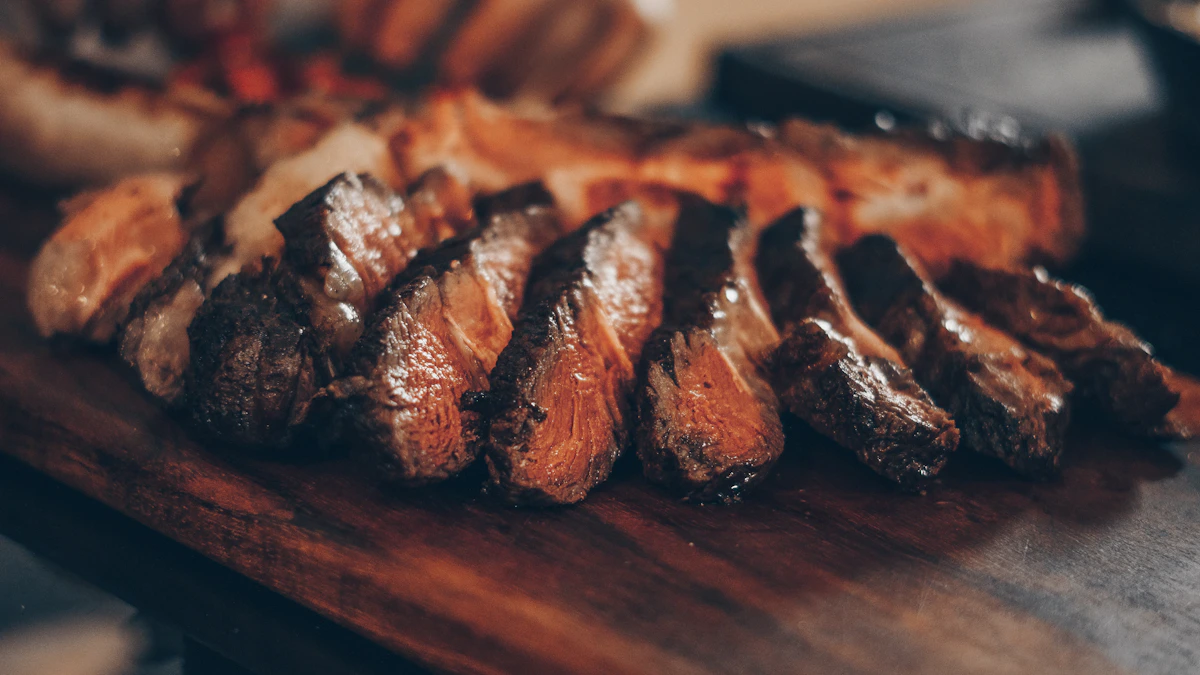
There is an elemental, primal satisfaction in pan-searing a thick-cut, well-marbled ribeye steak in smoking hot cast iron. While grilling has its place, true steakhouse masters know that a cast iron skillet delivers superior results: the flat, blistering metal provides continuous surface contact, creating a magnificent, mahogany-brown Maillard crust across the entire steak while capturing every drop of rendered beef fat.
When that sizzling crust is continuously basted with foaming butter, smashed garlic cloves, fresh rosemary, and thyme sprigs (the classic French technique of arrosé), the aromatic herb butter seeps into every crevice of the meat, creating a tender, juicy ribeye that rivals the finest steakhouses in the country.
The Science of a Steakhouse Sear
Cooking an unforgettable steak is not about luck; it is a masterclass in thermal physics:
- Bone-Dry Surface: Moisture is the mortal enemy of a crisp sear. Salting the steak 12 to 24 hours in advance and leaving it uncovered on a wire rack in the refrigerator (dry brining) allows surface moisture to evaporate completely, ensuring an immediate crust when hitting the pan.
- Room Temperature Rest: Take the steak out of the refrigerator 45 minutes before searing. A cold steak dropped into a hot pan shocks the metal, drops pan temperature, and results in a gray, overcooked outer band with a raw center.
- Heavy Cast Iron: Cast iron retains massive heat energy that does not collapse when cold beef hits its surface.
- The Arrosé Baste: Adding butter early burns the milk solids. Butter is added only during the final two minutes of cooking along with herbs, spooned rhythmically over the meat as it foams.
Pan-Seared Ribeye Steak with Garlic Herb Butter
Ingredients
9 itemsInstructions
11 steps-
01
Dry Brining (Best Flavor): Season the ribeye generously on all sides (including the fat edges) with kosher salt and black pepper. Place on a wire rack set over a baking sheet and refrigerate uncovered for 8 to 24 hours. (If short on time, season at room temperature 45 minutes before cooking).
-
02
Take the Chill Off: Remove the steak from the refrigerator 45 minutes before searing so it comes to room temperature. Pat completely dry with a paper towel.
-
03
Heat the Cast Iron: Place a 10- or 12-inch heavy cast iron skillet over high heat for 5 to 7 minutes until smoking hot. Add the avocado oil; it should shimmer and smoke instantly.
-
04
The Initial Sear: Carefully lay the ribeye into the skillet away from you to prevent hot oil spatter. Sear undisturbed for 2 to 2 1/2 minutes until a deep, mahogany-brown crust forms. Using tongs, flip the steak onto the second side and sear for 2 minutes.
-
05
Sear the Fat Cap: Using tongs, hold the steak upright on its side to press the thick white fat cap directly against the bottom of the skillet for 60 to 90 seconds until crisp, rendered, and golden.
-
06
The Butter Baste (Arrosé): Lower the heat to medium. Add the 3 tablespoons of cold butter, smashed garlic cloves, rosemary, and thyme sprigs to the skillet. As the butter melts and foams vigorously, tilt the skillet slightly toward you. Using a large spoon, scoop the foaming herb-and-garlic-infused butter continuously over the top of the steak for 2 minutes.
-
07
Check Temperature: Check internal temperature with an instant-read meat thermometer inserted into the thickest center part: Rare: 120°F to 125°F
-
08
Medium-Rare (Recommended): 130°F to 135°F (pull at 125°F for carryover heat)
-
09
Medium: 140°F to 145°F
Rest (Mandatory)
-
10
Never Skip the Rest: Slicing into a steak immediately will cause all its precious juices to bleed out onto the board, leaving the meat dry. Resting locks the juices inside.
-
11
High Smoke Point Oil: Never use extra-virgin olive oil for initial searing; it burns and turns bitter at 375°F. Avocado oil, ghee, or beef tallow handle 500°F heat with zero scorched flavor.
Frequently Asked Questions
Can I use this method for other steak cuts?
Yes! This identical cast-iron basting method works brilliantly for New York strip, filet mignon, flat iron, and thick-cut pork chops.
How do I reheat leftover steak without overcooking it?
Reheat cold steak gently in a 250°F (120°C) oven on a wire rack for 15 to 20 minutes until warm, then flash-sear in a hot skillet with butter for 30 seconds per side.
What to Serve Alongside
Pair this rich pan-seared ribeye with crispy roasted smashed potatoes, our warm Brussels sprouts slaw with bacon, or our shaved asparagus salad for an unforgettable feast.